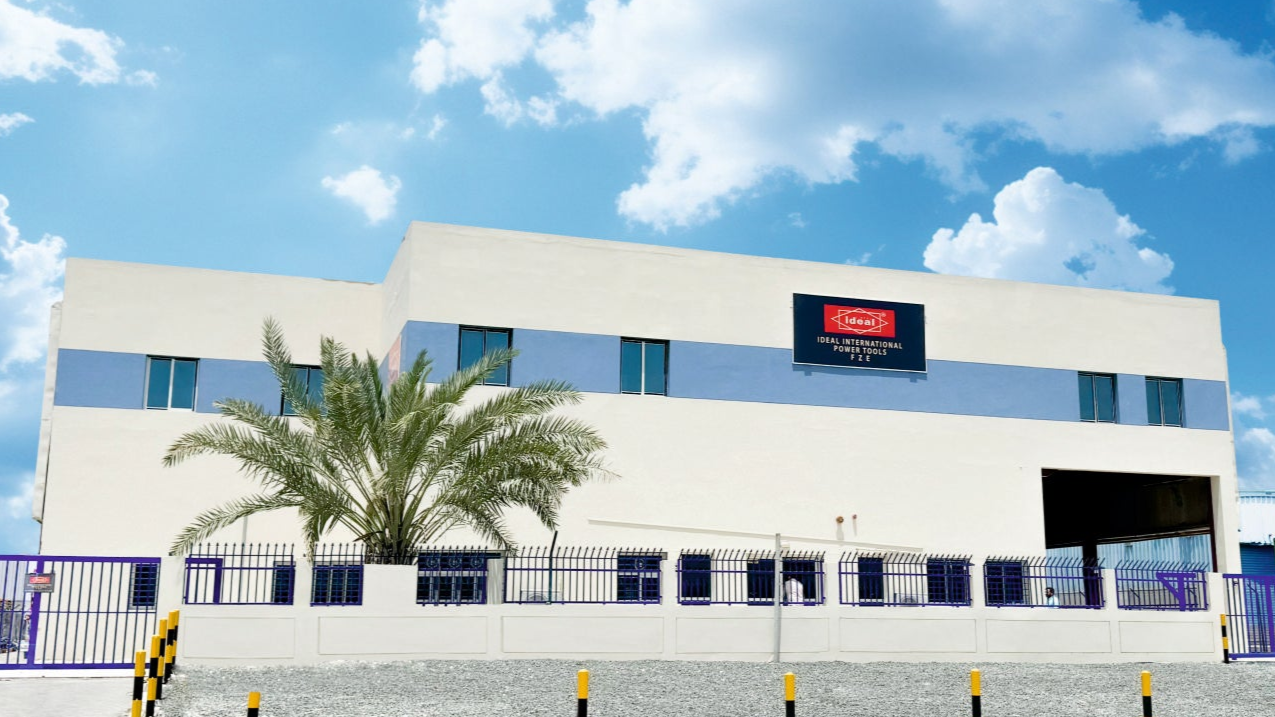

In the commercial construction and fabrication sectors of the UAE, project profitability is inextricably linked to operational speed and material efficiency. Utilizing mismatched commercial painting equipment in UAE leads to significant labor bottlenecks, excessive overspray, and potential coating failures.
Whether managing an expansive warehouse interior in Abu Dhabi or an intricate structural steel project in Dubai, matching fluid dynamics to the specific viscosity of your coatings is a technical necessity. This guide provides a strategic overview of how to select and deploy professional spraying tools to accelerate project timelines while maintaining high-caliber finishes.
Engineering Efficiency in Commercial Coating Workflows
The primary objective for any commercial contractor is the optimization of material transfer, ensuring that the maximum amount of coating reaches the substrate with minimal waste. Using the incorrect system for high-viscosity materials results in poor atomization and thousands of dirhams in lost profit.
Investing in high-grade industrial spray guns in Dubai ensures your crew has the mechanical force necessary to handle everything from heavy block fillers to fine architectural lacquers. By understanding the distinct capabilities of airless, HVLP, and cordless systems, project managers can transform their application process into a high-efficiency workflow.
High-Volume Application: Deploying Airless Spray Systems
When project milestones involve thousands of square feet, such as multi-story building facades or extensive structural steel frameworks, output volume is the critical metric. Traditional application methods are often too slow for the fast-tracked schedules common in the Dubai construction market.
Overcoming Scaling Challenges in Industrial Environments
Airless systems utilize high-pressure hydraulic force to atomize thick coatings instantly, bypassing the need for compressed air. This extreme pressure allow contractors to spray heavy-bodied latex, elastomerics, and fireproofing materials at high speed, ensuring rapid square-footage coverage that significantly reduces man-hours.
The Heavy-Duty Standard: The ID ASG50 & ASG53 Airless Systems
To meet aggressive industrial demands, the ID ASG50 Electric Airless Spray Gun and its reinforced counterpart, the ID ASG53 Electric Airless Spray Gun, serve as the backbone for high-output crews. Rather than relying on standard pneumatic setups, these units are engineered with robust electric motors capable of sustaining the high working pressures required for thick coatings.
This sustained hydraulic force ensures the flawless atomization of high-viscosity materials, such as elastomerics, heavy latex, and block fillers, without the need for excessive thinning. To help contractors select the right pump for their project volume, here is a direct comparison of their technical specifications:
| Specification | ID ASG50 Electric Airless Spray Gun | ID ASG53 Electric Airless Spray Gun |
|---|---|---|
| Rated Power Input | 650 W | 750 W |
| Working Pressure | 2,500 PSI | 23 MPa (Approx. 3,335 PSI) |
| Max Fluid Delivery | 1.4 L/min | 1 L/min |
| Motor Design | Double Insulated / Heavy Duty | Double Insulated / Heavy Duty |

ID ASG50 Electric Airless Spray Gun: Optimized for high-volume efficiency with a 650W motor and 1.4 L/min fluid delivery.

ID ASG53 Electric Airless Spray Gun: A heavy-duty powerhouse with a 750W motor, engineered for demanding industrial applications.
Precision Finishing: The Strategic Use of HVLP Technology
For high-end architectural details, custom cabinetry, and automotive fabrication, raw speed is secondary to the quality of the finish. Standard high-pressure systems often suffer from high bounce-back, where expensive materials vanish into the air as overspray.
Maximizing Material Transfer Efficiency on Complex Substrates
High Volume, Low Pressure (HVLP) systems address this challenge. By utilizing a high volume of air at a very low pressure (typically around 10 PSI at the air cap), HVLP systems gently deposit atomized coatings. This specialized fluid dynamic pushes transfer efficiency above 65%, ensuring more paint stays on the surface.
Technical Benchmark: The ID 827 Pneumatic Advantage
For contractors requiring a mirror-like finish, the ID 827 Pneumatic Spray Gun is the definitive instrument. Operating with an air consumption rate of 410 Nl/min at a working pressure of 3.0 to 4.0 bar, it provides exceptional control over the fan pattern.
Equipped with precise 1.4mm and 1.7mm fluid nozzle options, it handles low-to-medium viscosity fluids like lacquers and enamels with continuous, fatigue-free control.

Achieve smooth, even finishes with the ID 827 Pneumatic Spray Gun Machine - designed for precision spraying and professional-quality results.
Site Mobility: Cordless and Handheld Systems
Certain operational phases, such as rapid touch-ups or facilities management tasks, require immediate mobility. Relying on heavy air hoses or temporary site power can create safety hazards and logistical delays.
To overcome this, integrating a versatile lineup of compact handheld systems, such as the highly maneuverable ID SG500E and ID SG300E Electric spray gun machines, ensures crews have the exact agility and localized control required for targeted work without the bulk.
Rapid Deployment for Touch-ups and Off-Grid Sites
Handheld units and cordless chemical sprayers fill the gap for off-grid mobility. They allow crews to deploy across large properties to apply sealants, thin coatings, or liquid disinfectants without the extensive setup time required by static pumps.
Unrestricted Movement: The IDU SG-900 Cordless Platform
For unrestricted movement, the IDU SG-900 Cordless Spray Gun Kit provides a self-contained application system powered by a 20V Lithium-Ion battery. The built-in internal turbine generates the airflow required to atomize light-to-medium fluids instantly. With a 900ml container and adjustable flow control, it is the ideal tool for fast-response finishing anywhere on a job site.

Smooth, cordless finishing made easy with the IDU SG-900 Spray Gun Kit.
The Complete Application Workflow: Preparation and Mixing
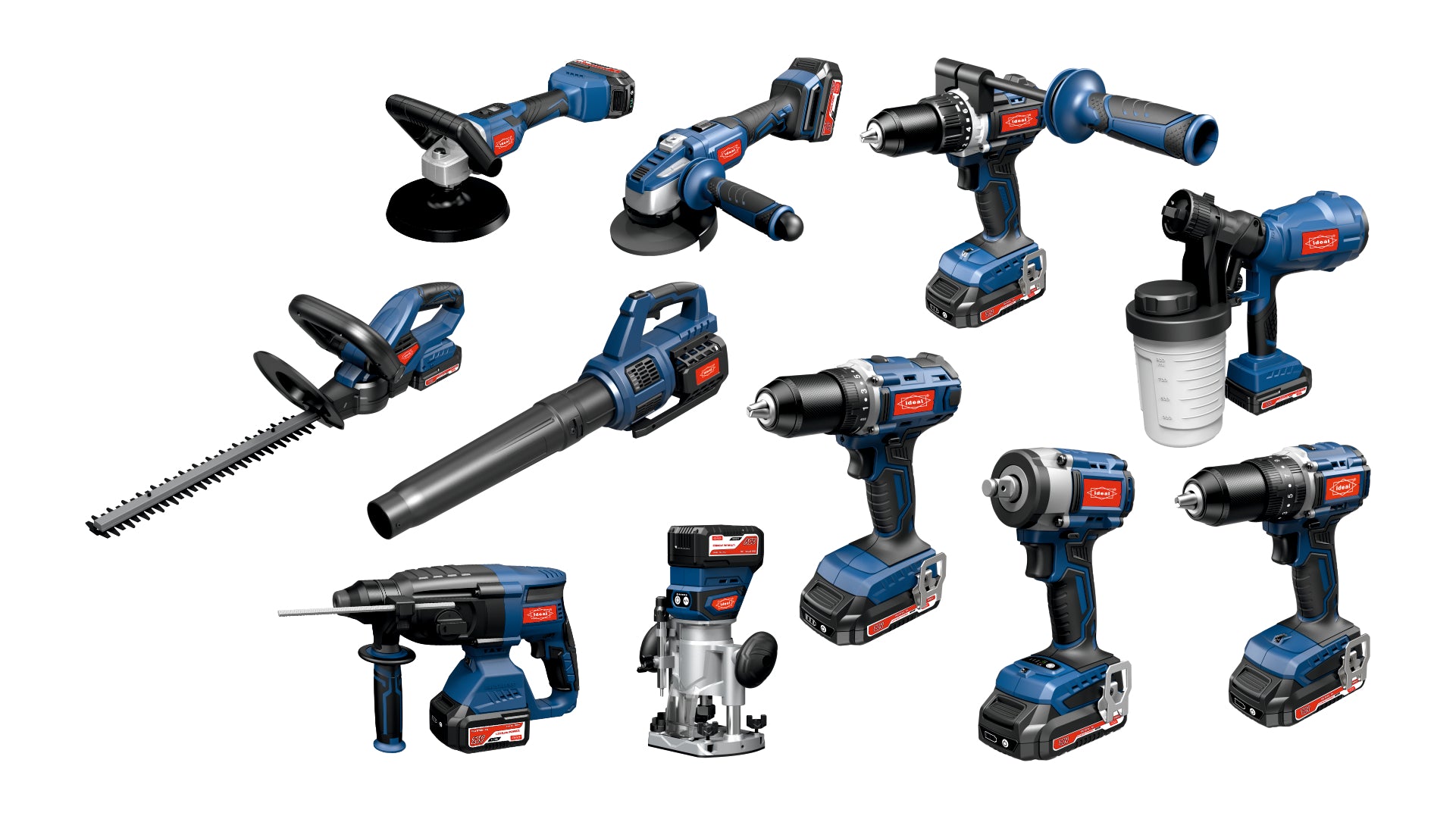
As categorized in the Ideal Power Tools workflow, spraying is only effective when preceded by proper preparation and mixing.
Phase 1: Substrate Preparation with the ID SR500 Pressure Washer
Advanced sprayers cannot compensate for poor substrate preparation. Applying industrial coatings over dirt or chalking paint guarantees premature peeling. To tackle demanding commercial site preparation, we recommend the ID SR500 Electric Pressure Washer Machine.
This professional-grade cleaner features a robust 2400W copper motor delivering 1,740 PSI. It provides the sustained high pressure and 540 L/h flow rate required to strip stubborn grime and old paint from concrete and structural steel prior to coating.
Phase 2: Material Homogenization with the ID EM2-1400 Mixer
Commercial coatings often settle during storage. Attempting to run unmixed fluids through a high-pressure airless pump leads to tip clogging and inconsistent fan patterns. Utilizing the ID EM2-1400 Dual Rod Electric Paint Mixer Machine guarantees uniform viscosity for projects demanding larger mixing capabilities.
Its 1400W motor and dual-rod configuration provide the rapid blending required for heavy commercial materials, ensuring resins and pigments are perfectly homogenized before they ever reach the spray gun.

ID EM2-1400 Dual Rod Mixer: Features a 1400W motor for the rapid blending of heavy commercial materials.
For smaller job sites that do not require such high-volume output, matching your equipment to the scale of the project is key. Excellent alternatives for these more compact applications include the ID PM1200, ID EM160S, or ID EM160P mixers. These models deliver the same reliable, professional-grade consistency but are perfectly optimized for lower-volume work.
Maintenance Protocols and Component Selection
The longevity of professional spraying tools relies on strict maintenance and precise component configurations.
Sizing the Correct Nozzle Tips
The nozzle tip dictates both the fan width and the flow rate.
| Coating Type | Recommended Nozzle Tip Size | Common Applications | Best Equipment Match |
|---|---|---|---|
| Thin (Stains, Lacquers, Sealants) | 0.011" – 0.013" | Custom cabinetry, woodwork, metal detailing | HVLP (ID 827) / Cordless (IDU SG-900) |
| Medium (Latex, Acrylics, Enamels) | 0.015" – 0.019" | Interior walls, fencing, general commercial | Airless (ID ASG50) / HVLP (ID 827) |
| Heavy (Elastomerics, Block Fillers) | 0.021" – 0.035"+ | Exterior building facades, structural steel, fireproofing | Heavy-Duty Airless (ID ASG50 Series) |
System Flushing and Internal Protection
Pro Maintenance Protocols
To protect equipment in the UAE heat, implement these procedures immediately after use:
- Immediate Flushing: Use the appropriate solvent until the fluid runs clear.
- Component Care: Soak nozzle tips and filters in cleaning solvent.
- Pump Storage: Use a dedicated pump armor fluid to keep internal seals lubricated and prevent corrosion.
FAQs About Professional Spraying Tools
1. What is the difference between an HVLP paint sprayer vs airless system?
Airless systems use hydraulic pressure for high-volume coverage with thicker paints. HVLP systems use low-pressure air for precision finishing with thinner materials, resulting in significantly less overspray.
2. Can the ID SR500 be used for residential detailing?
While the ID SR500 is a powerful 2400W commercial unit, its adjustable pressure makes it versatile. However, for dedicated home use, smaller units like the ID SR210 are often more portable.
3. Where can I buy industrial spray guns in Dubai?
Professional-grade equipment can be sourced directly from Ideal Power Tools, catering to contractors and fabrication shops throughout the UAE.
Conclusion: Mastering the Application Workflow
Mastering the application workflow is key to achieving industry-standard finishes on any commercial project. By selecting the appropriate commercial painting equipment in the UAE, from high-pressure surface preparation to the correct airless or HVLP system, contractors can eliminate bottlenecks, reduce material waste, and maximize operational efficiency.
Ultimately, matching your equipment to your specific project scale and fluid requirements transforms labor-intensive tasks into highly profitable operations. To explore the technical specifications of the systems mentioned in this guide, visit www.idealpowertools.com.