
ID EM2-1400 DUAL ROD [1400 W] [1400W] ELECTRIC PAINT MIXER MACHINE [G-240V] - 29108


 Chat with us
Choose options
Professional-Grade Mixing Power — Built to Outlast the Job Site
Electric paint mixer machines are engineered to blend paints, coatings, and viscous liquids to a uniform consistency, and the ID EM2-1400 Dual Rod Electric Paint Mixer delivers exactly that with professional-grade reliability. Powered by a 1400W motor and featuring a dual mixing rod configuration, this machine eliminates lumps and sediment with precision. Supplied with a Type G (British 3-Pin) plug, it is ready for use across UAE, UK, and compatible 220–240V markets straight out of the box.
| Key Features | Perfect For |
|---|---|
|
|
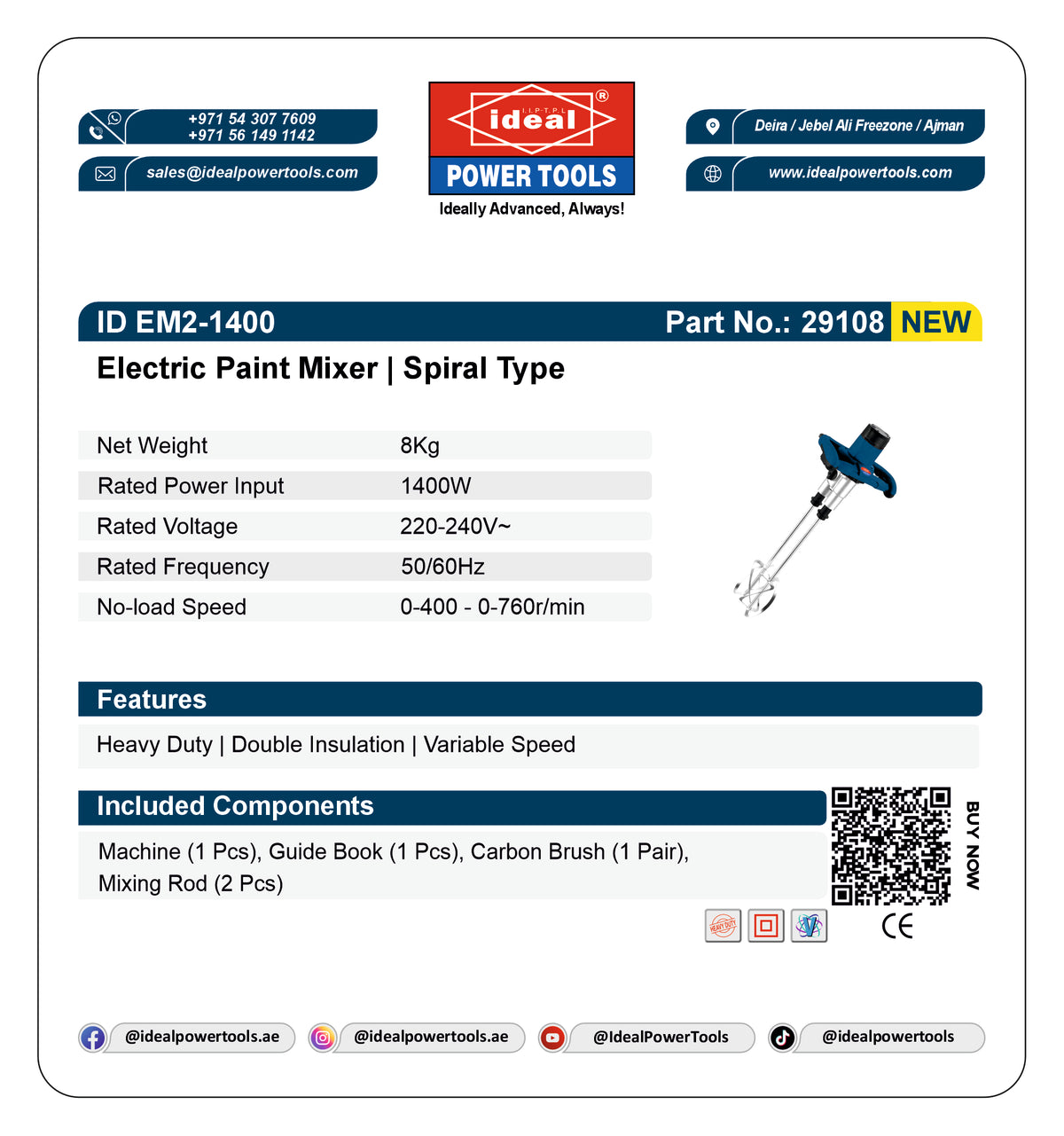
- The 1400W rated power input drives the dual mixing rods at two selectable speed ranges, 0–400 r/min for low-viscosity materials such as thin paints and primers, and 0–760 r/min for high-viscosity materials such as adhesives, textured coatings, and epoxy compounds, giving operators full control over the mixing process without switching tools.
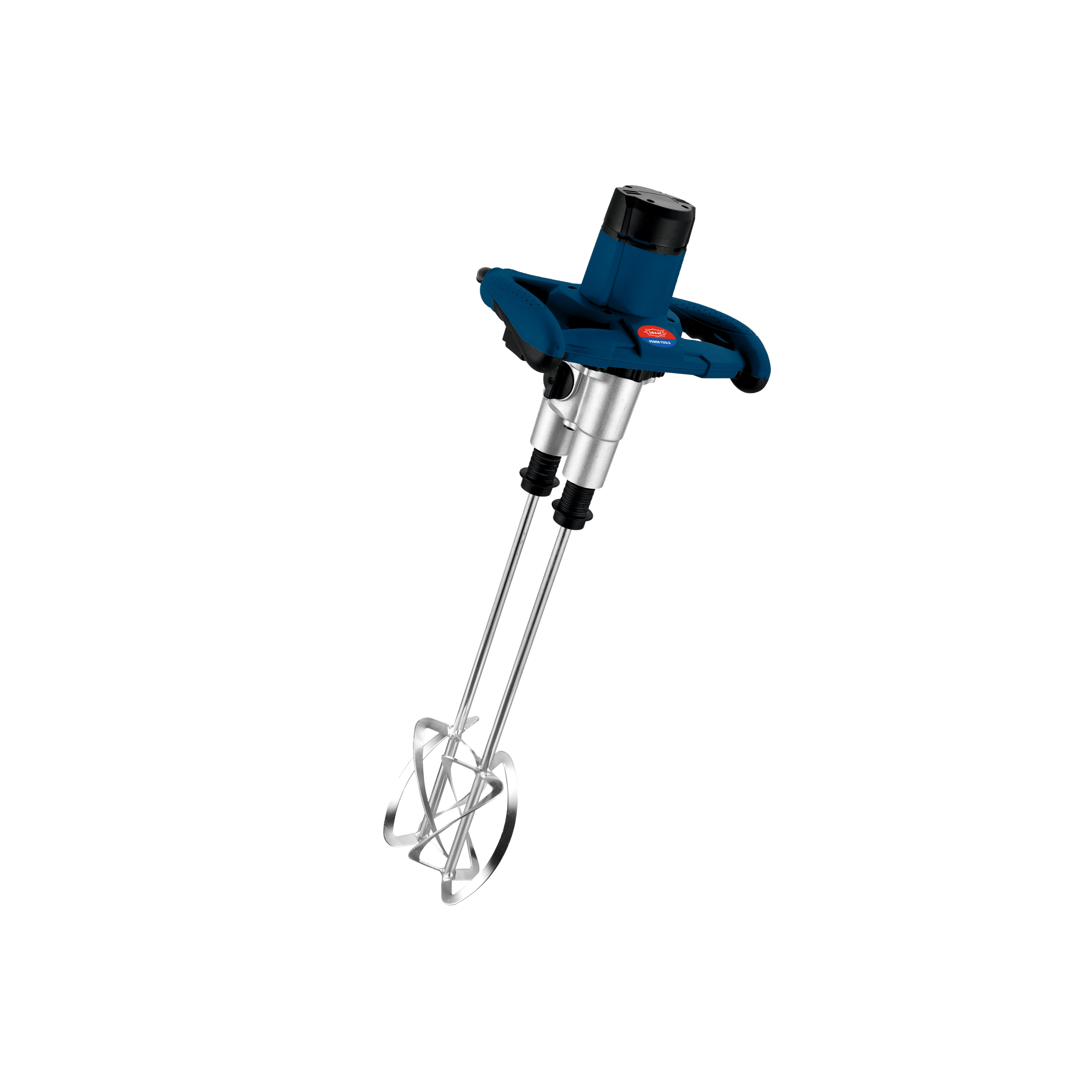
- The dual rod mixing shaft creates a wide agitation field within the container, ensuring that pigments, binders, and additives are fully incorporated from the bottom up, eliminating dry pockets, colour streaks, and unmixed sediment that single-rod mixers commonly leave behind.
- Built with double insulation technology, the machine's internal electrical components, motor windings, wiring, and contacts, are completely separated from the outer housing, meaning there is no conductive path to the user's hands even in the event of an internal fault, making it compliant with CE (Machine Test) certification standards for electrical safety in professional environments.
- The auto-stop carbon brush set (included as a spare pair) is a critical maintenance component: when the carbon brushes wear down to their minimum safe length, the motor automatically cuts power, preventing armature damage and extending the operational lifespan of the machine significantly beyond standard mixers that require manual inspection.
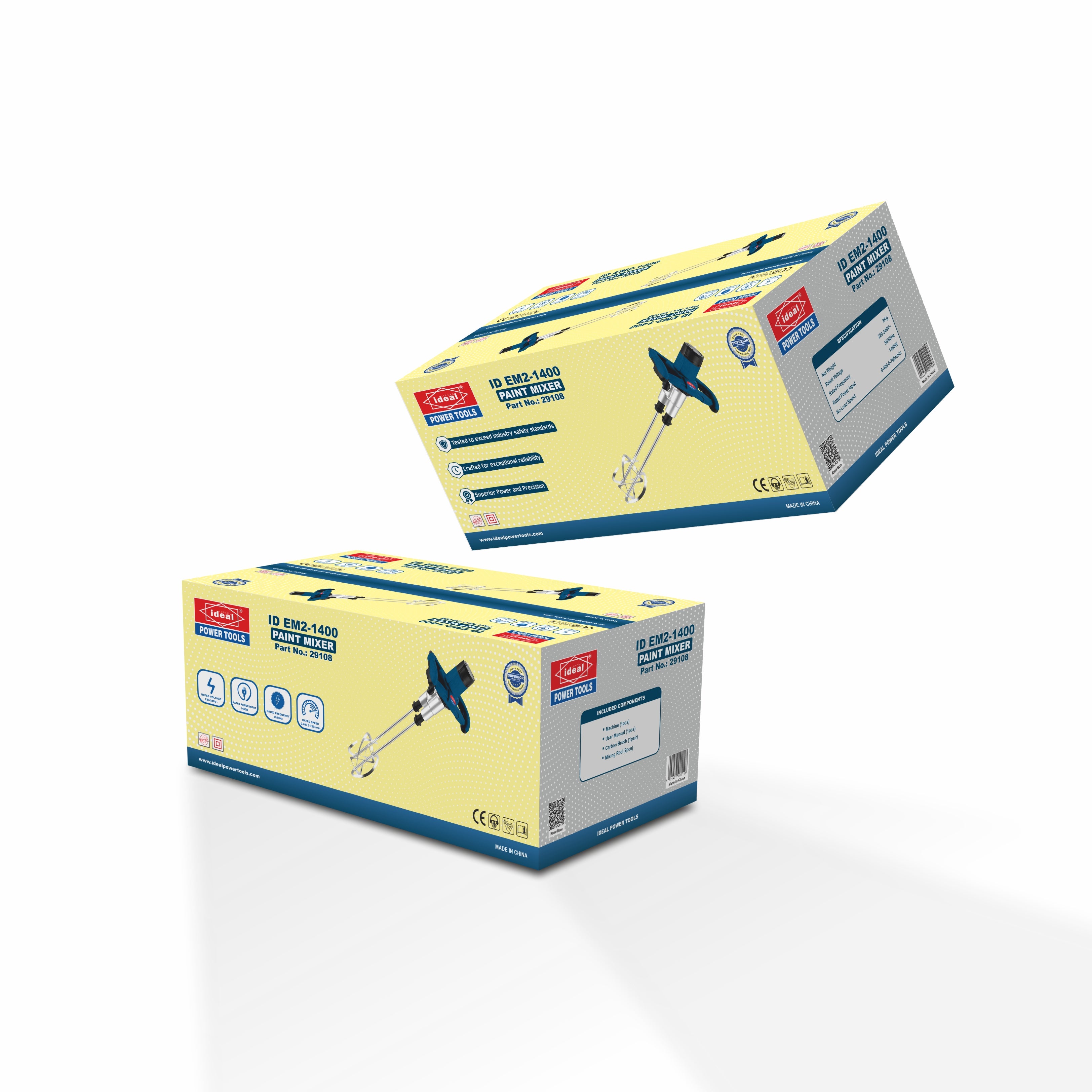
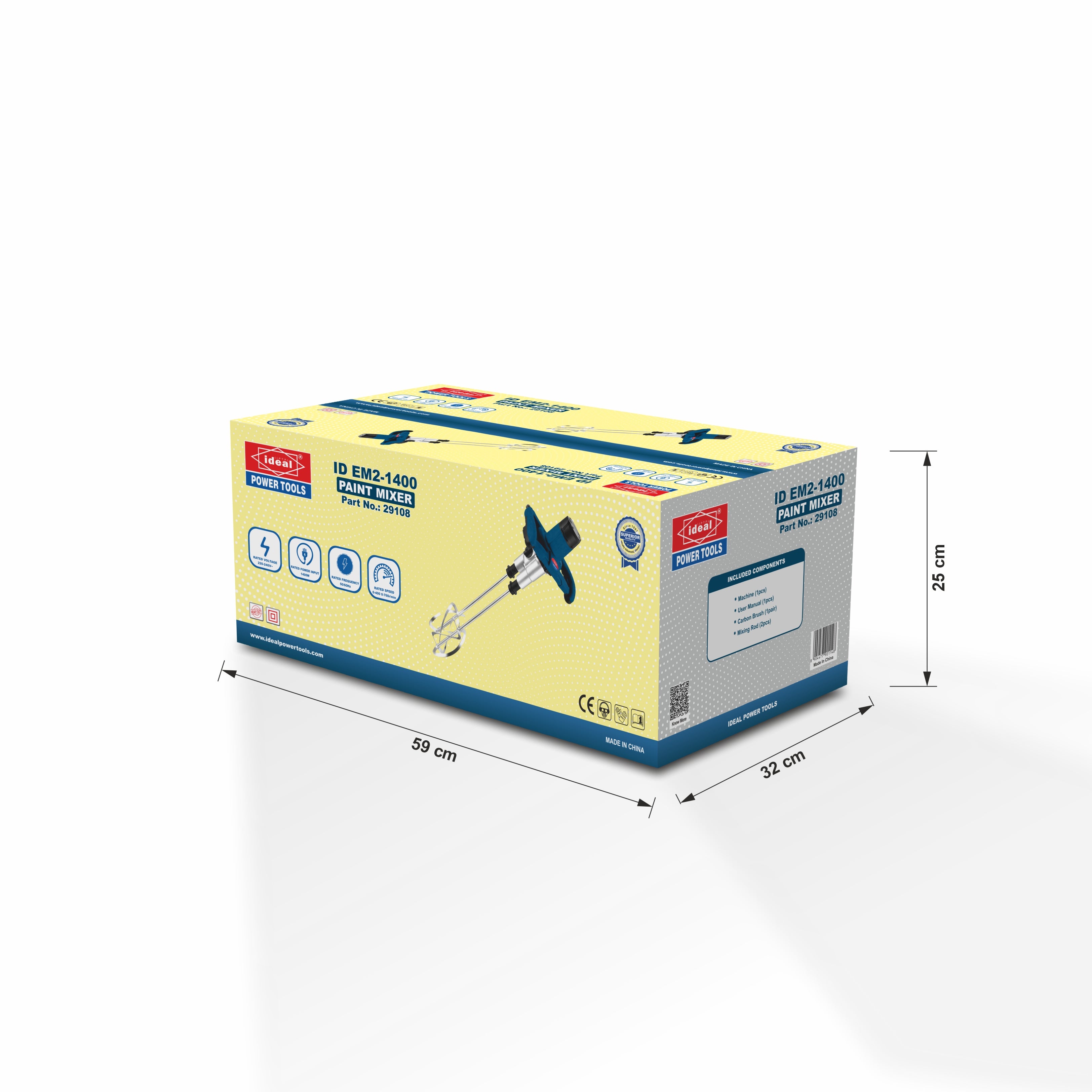
- Weighing 8 kg net and rated for 220–240V~ / 50–60Hz operation, the EM2-1400 is designed for sustained site use across UAE, UK, and European power infrastructure. The machine ships complete with the unit itself, a printed guide book, one pair of auto-stop carbon brushes, and two mixing rods, everything required to begin operation immediately upon delivery.
General Purchase & Comparison Queries
Is the ID EM2-1400 suitable for professional or heavy-duty use?
Yes. The ID EM2-1400 is engineered for professional and heavy-duty applications. Its 1400W motor, dual rod configuration, and auto-stop carbon brush system are all features found in contractor-grade equipment. The machine carries a CE (Machine Test) certification, confirming it meets European safety and performance standards for professional use in construction, industrial, and painting environments.
How does the dual rod design compare to a single rod mixer?
A dual rod mixer creates a wider agitation field within the container, pulling material from multiple points simultaneously. This results in faster, more thorough blending — particularly important when working with thick coatings, pigmented paints, or materials prone to settling. Single rod mixers can leave unmixed pockets near the container walls, whereas the dual rod design of the EM2-1400 ensures consistent results across the full volume of the mix.
Is this mixer compatible with UAE and UK power supplies?
Yes. The EM2-1400 is rated for 220–240V~ / 50–60Hz and is supplied with a Type G (British 3-Pin) plug, making it directly compatible with UAE and UK wall sockets without any adapter. It is also compatible with most European and GCC power infrastructure operating on the same voltage range.
Product-Specific and Usage Queries
What materials can the ID EM2-1400 mix effectively?
The EM2-1400 is designed to handle a wide range of materials. At the lower speed range (0–400 r/min), it is ideal for thin paints, primers, and water-based coatings. At the higher speed range (0–760 r/min), it effectively blends thicker materials including adhesives, epoxy resins, textured wall coatings, tile grout, and heavy-bodied industrial paints. The dual rod design ensures thorough incorporation regardless of viscosity.
What does the auto-stop carbon set do and when should it be replaced?
The auto-stop carbon brushes are the electrical contacts that transfer current to the motor's rotating armature. As the machine is used over time, these brushes gradually wear down. When they reach their minimum safe length, the auto-stop mechanism automatically cuts power to the motor, preventing armature damage and avoiding costly repairs. A spare pair is included in the box. Replacement is recommended as soon as the machine stops unexpectedly — this is a normal maintenance event, not a fault.
What is the no-load speed and how do I select between the two speed ranges?
The EM2-1400 offers two variable speed ranges: 0–400 r/min and 0–760 r/min, selectable via the machine's speed control mechanism. The no-load speeds represent the maximum RPM the motor reaches without resistance. Under load — when mixing actual material — speeds will be slightly lower depending on viscosity. Start at the lower range for thin materials and switch to the higher range for thicker compounds to achieve optimal mixing results.
Problem/Solution-Oriented Queries
The machine stopped working mid-use — what should I check first?
If the EM2-1400 stops unexpectedly during operation, the most likely cause is that the auto-stop carbon brushes have reached the end of their service life. This is a built-in safety feature, not a malfunction. Switch off and unplug the machine, allow it to cool, then replace the carbon brushes with the spare pair included in the box. If the machine still does not operate after replacing the brushes, check that the power supply is live and the plug is fully seated. For persistent issues, contact your point of purchase for service support.
The paint is not mixing evenly — how can I improve results?
Uneven mixing is usually caused by incorrect speed selection or rod positioning. For best results, submerge both rods fully before starting the motor to avoid splashing. Use the lower speed range (0–400 r/min) for thin or partially mixed materials, then gradually increase speed. Move the rods slowly up and down within the container to pull settled pigment from the bottom. For very thick materials, allow the mixer to work at mid-depth before moving toward the sides and base of the container.
Is the machine safe to use without additional protective equipment?
The EM2-1400 is built with double insulation, meaning the internal electrical components are fully isolated from the outer casing — there is no conductive path to the operator's hands even in the event of an internal fault. This design meets CE (Machine Test) certification requirements. However, standard site safety practices should always be followed: wear chemical-resistant gloves when handling paints and coatings, use eye protection to guard against splatter, and ensure the work area is adequately ventilated when mixing solvent-based materials.
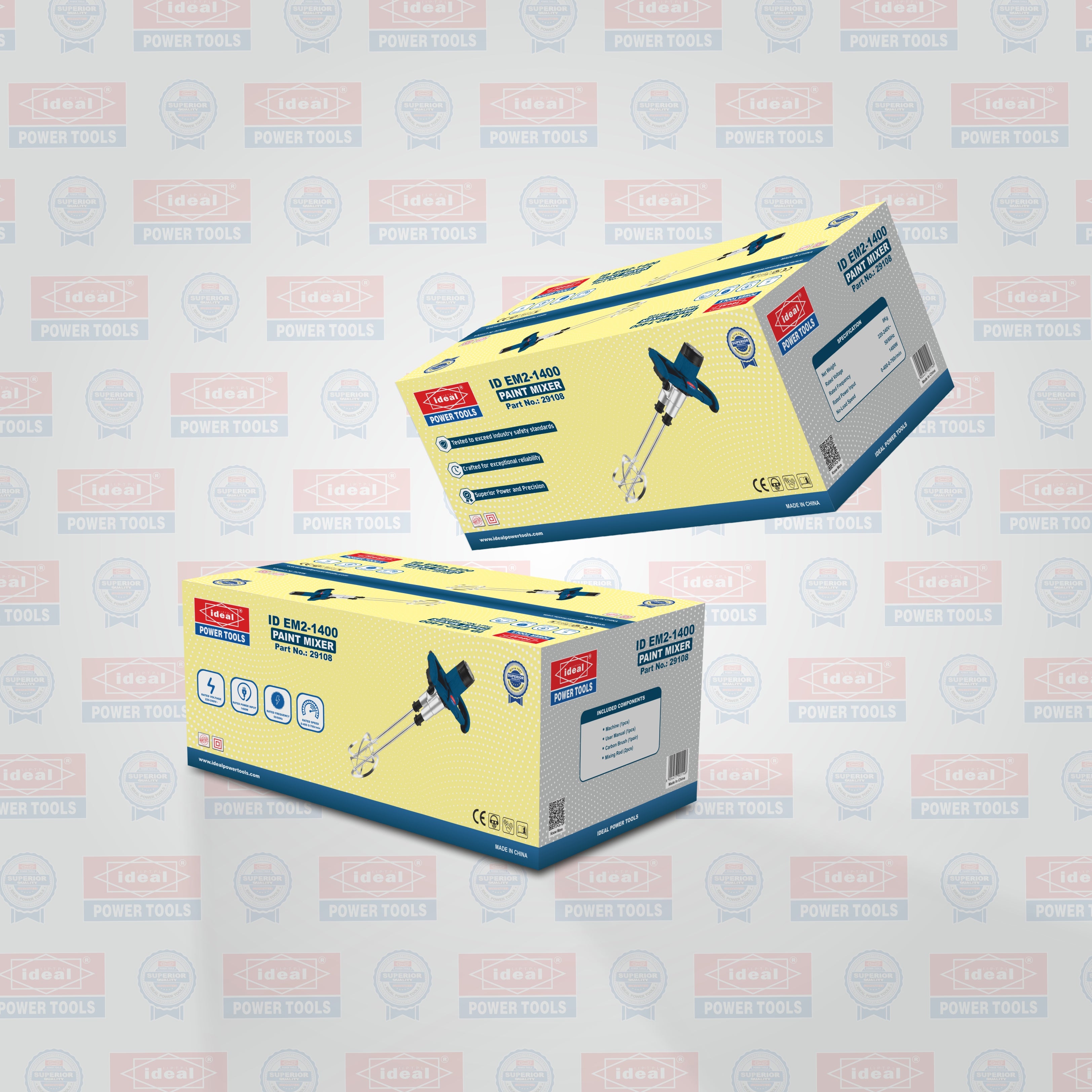
Machine (1 Pcs), Guide Book (1 Pcs), Auto-Stop Carbon Set (1 Pair), Mixing Rod (2pcs)