

Choosing between SDS-Plus vs SDS-Max is not simply a matter of selecting a larger or smaller chuck. The right system depends on the size of the holes you need to drill, the material you are working with, the required impact energy, and how frequently the tool will be used. If you're still deciding whether a rotary hammer is the right tool for your application, start with IDEAL's guide to impact drill vs rotary hammer before comparing SDS-Plus and SDS-Max systems.
Quick Answer: SDS-Plus vs SDS-Max
-
Choose SDS-Plus: For everyday concrete and masonry drilling, anchor holes, MEP installations, and lighter chiselling.
IDEAL Models: ID HD2-20SRE and ID HD2-26QC -
Choose SDS-Max: For significantly higher impact energy, larger drilling capacities, or heavy-duty drilling and chiselling.
IDEAL Models: ID GBH7DE and ID GSH388
Table of Contents
- SDS-Plus vs SDS-Max: At a Glance
- What Is SDS-Plus?
- What Is SDS-Max?
- SDS-Plus vs SDS-Max: Key Differences
- SDS-Plus: When Should You Choose It?
- SDS-Max: When Should You Choose It?
- IDEAL SDS-Plus Rotary Hammers
- IDEAL SDS-Max Rotary Hammers
- SDS-Plus vs SDS-Max for Common Jobs
- Can SDS-Plus Bits Fit SDS-Max Tools?
- How to Choose the Right SDS Rotary Hammer
- SDS Bit Maintenance Tips
- Frequently Asked Questions
- Final Verdict
SDS-Plus vs SDS-Max: At a Glance
| Feature | SDS-Plus | SDS-Max |
|---|---|---|
| Typical application | General concrete & masonry drilling | Heavy-duty drilling & chiselling |
| Tool size | Compact to mid-size | Larger and heavier |
| Bit size | Smaller diameter range | Larger diameter range |
| Impact energy | Lower to medium | Medium to very high |
| Best for | Anchors, MEP, fixings, renovation | Large holes, heavy drilling, demanding construction |
| Operator fatigue | Generally lower | Generally higher |
| Tool portability | Easier to handle | Designed for heavy-duty applications |
| Ideal user | Tradespeople, installers, contractors, DIY users | Construction contractors, demolition and heavy-duty trades |
| IDEAL example | ID HD2-20SRE / ID HD2-26QC | ID GSH388 / ID GBH7DE |
The key point is simple:
SDS-Plus prioritizes versatility and maneuverability. SDS-Max prioritizes impact power and heavy-duty performance.
What Is SDS-Plus?
SDS-Plus is one of the most widely used shank systems for rotary hammer drills. The slotted shank design allows compatible bits to lock into the chuck while still allowing the axial movement required for the hammering mechanism.
This makes SDS-Plus particularly effective for drilling concrete, brick, block, stone, and other masonry materials.
The system is well suited to applications such as:
- Drilling anchor holes
- Installing wall plugs and fixings
- Electrical conduit installation
- Plumbing installation
- MEP work
- Drilling holes for brackets and supports
- Tile removal
- Light chiselling
- General renovation work
For many contractors, an SDS-Plus rotary hammer provides the best balance between power, portability, drilling capacity, and versatility.
For example, the IDEAL ID HD2-20SRE uses an SDS-Plus system and provides 1.7J of impact energy, with a maximum concrete drilling capacity of 20mm. Its compact 2.6kg design makes it particularly suitable for repetitive drilling and anchoring applications.
What Is SDS-Max?
SDS-Max is a larger, heavy-duty shank system designed for more powerful rotary and demolition hammers.
The larger shank and tool-holder design are intended to transfer considerably greater impact forces into the accessory. As a result, SDS-Max machines are commonly used when the job involves:
- Large-diameter concrete drilling
- Heavy-duty masonry drilling
- Large anchor holes
- Concrete chiselling
- Wall opening
- Floor and tile removal
- Heavy renovation
- Construction and excavation work
- Demolition-related applications
SDS-Max tools are generally larger and heavier than SDS-Plus machines because they are designed around higher impact energy and heavier accessories.
The IDEAL ID GSH388, for example, uses an 18mm SDS-Max shank, produces 15J of impact energy, and has a maximum drilling capacity of 45mm. It is designed for heavy-duty drilling and hammering through concrete, brick, and stone.
SDS-Plus vs SDS-Max: Key Differences
The biggest mistake when choosing an SDS system is focusing only on the shank.
Instead, consider the complete tool and application.
1. Impact Energy
Impact energy is one of the most important specifications on a rotary hammer.
A higher Joule rating generally means the tool can deliver a more powerful blow to the bit, making it better suited to demanding materials and larger drilling or chiselling applications.
SDS-Plus machines typically occupy the lower-to-mid impact-energy range, while SDS-Max machines are built to accommodate substantially higher impact forces.
For example:
- IDEAL ID HD2-20SRE: 1.7J
- IDEAL ID HD2-26QC: 3J
- IDEAL ID GBH7DE: 7.9J
- IDEAL ID GSH388: 15J
These differences illustrate why SDS-Max machines are better suited to heavy-duty applications.
2. Drilling Capacity
SDS-Plus is usually the better choice for smaller and medium-sized holes.
Think about applications such as:
- 6–12mm anchor holes
- 10–16mm fixing holes
- Electrical installation
- Plumbing supports
- Wall plugs
- General concrete drilling
SDS-Max becomes more attractive when the job regularly requires larger holes.
The IDEAL ID GSH388, for instance, has a maximum drilling capacity of 45mm.
3. Tool Weight
SDS-Plus rotary hammers are generally easier to carry, position, and operate for extended drilling tasks.
That matters when:
- Working overhead
- Drilling multiple anchor holes
- Moving between rooms
- Working from ladders or platforms
- Performing repetitive MEP installations
SDS-Max tools are heavier because their construction and impact systems are designed for substantially more demanding work.
For example, the IDEAL ID HD2-20SRE weighs 2.6kg, while the ID GSH388 weighs 8.2kg.
4. Versatility
If your work involves many small and medium drilling tasks, SDS-Plus is usually the more practical option.
SDS-Max is more specialized toward heavy-duty drilling and chiselling.
This does not mean SDS-Max is less capable. It means you should avoid carrying a heavier, more powerful machine when your actual jobs only require a compact rotary hammer.
5. Bit Availability and Cost
SDS-Plus bits are extremely common and are available in a wide variety of diameters and accessory types.
SDS-Max accessories are designed for heavier applications and tend to be larger and more specialized.
Therefore, if most of your work involves everyday anchoring and installation, SDS-Plus can be the more economical overall system.
SDS-Plus: When Should You Choose It?
Choose SDS-Plus if your primary work involves general concrete drilling rather than heavy-duty breaking.
For a broader comparison of rotary hammers, demolition hammers, and core drills, see our concrete tools guide.
SDS-Plus is ideal for:
- Anchor installation: Drilling holes for anchors, wall plugs, brackets, and fasteners is one of the most common SDS-Plus applications.
- MEP installation: Electricians, plumbers, HVAC installers, and other trades frequently need compact rotary hammers for repetitive concrete and masonry drilling.
- Renovation: For drilling and light chiselling during residential and commercial renovation, SDS-Plus provides a practical combination of power and control.
- Overhead drilling: A lighter machine can be significantly easier to manage when drilling into ceilings.
- General construction: If your drilling requirements usually remain within small-to-medium hole sizes, SDS-Plus is often sufficient.
SDS-Max: When Should You Choose It?
SDS-Max becomes the better choice when impact power and drilling capacity are more important than compact size.
Choose SDS-Max when you regularly:
- Drill large holes in concrete
- Work with dense reinforced masonry
- Perform heavy-duty chiselling
- Remove substantial amounts of concrete
- Open walls for pipes or services
- Remove thick tiles or screed
- Work on demanding construction sites
- Need higher impact energy
The IDEAL ID GSH388 is a strong example of this category. Its 1500W motor, 15J impact energy, SDS-Max shank, and 45mm maximum drilling capacity make it suitable for heavy-duty drilling and hammering applications.
IDEAL SDS-Plus Rotary Hammers
IDEAL offers several SDS-Plus rotary hammer options for different levels of drilling work.
ID HD2-20SRE: Compact SDS-Plus Choice
The ID HD2-20SRE is designed for contractors and tradespeople who need a compact rotary hammer for concrete and masonry drilling.
Key specifications:
- 500W motor
- 1.7J impact energy
- Up to 3,900 BPM
- 20mm maximum concrete drilling capacity
- SDS-Plus chuck
- 2.6kg net weight
- 2-mode operation
Best for: Everyday drilling where portability and control matter.

Ideal ID HD2-20SRE - Compact SDS-Plus power for precise concrete and masonry drilling.
ID HD2-26QC: Versatile SDS-Plus Workhorse
For professionals who need more power and greater versatility, the ID HD2-26QC offers an 800W motor and 3J impact energy.
It can drill up to 26mm in concrete and includes a quick-change chuck system that makes it easier to switch between SDS-Plus accessories and conventional drill bits.
Key specifications:
- 800W motor
- 3J impact energy
- Up to 4,900 BPM
- 26mm maximum concrete drilling capacity
- SDS-Plus system
- Quick-change chuck
- Drilling, hammer drilling, and chiselling modes
Best for: Contractors who want one versatile rotary hammer for concrete, masonry, light chiselling, and additional drilling applications.

Ideal ID HD2-26QC – Versatile SDS-Plus power for drilling, hammering, and chiselling.
IDEAL SDS-Max Rotary Hammers
When your work moves beyond everyday drilling, IDEAL's SDS-Max machines provide a significant step up in impact capability.
ID GBH7DE: Heavy-Duty SDS-Max Rotary Hammer
The ID GBH7DE combines an 1100W motor with 7.9J of impact power and a maximum drilling capacity of 38mm.
Its 18mm SDS-Max shank is designed for heavy-duty work, while its 6.2kg weight provides a balance between impact performance and maneuverability.
Key specifications:
- 1100W motor
- 7.9J impact power
- 38mm maximum drilling capacity
- 18mm SDS-Max shank
- 6.2kg net weight
- Up to 2,900 impacts/min
Best for: Professionals who need substantially more impact power and larger drilling capacity than a standard SDS-Plus rotary hammer.

Ideal ID GBH7DE – Heavy-duty SDS-Max power for demanding concrete drilling and chiselling.
ID GSH388: High-Power SDS-Max Combi-Hammer
For demanding drilling and chiselling applications, the ID GSH388 sits at the heavier end of IDEAL's rotary hammer range.
It delivers:
- 1500W motor
- 15J impact energy
- 45mm maximum drilling capacity
- 18mm SDS-Max shank
- 8.2kg net weight
- Up to 2,700 impacts/min
Unlike a dedicated demolition hammer, the ID GSH388 retains rotation for drilling while providing substantial impact power for heavy-duty hammering applications.
Best for: Heavy construction, large concrete holes, demanding masonry work, and applications requiring both drilling and powerful chiselling.

Ideal ID GSH388 - 15J SDS-Max power for heavy-duty drilling and chiselling.
SDS-Plus vs SDS-Max for Common Jobs
| Job | Recommended System | Why |
|---|---|---|
| Wall plug installation | SDS-Plus | Compact and easy to control |
| Anchor holes | SDS-Plus | Excellent for common fixing sizes |
| Electrical conduit holes | SDS-Plus | Portable for repetitive drilling |
| Plumbing installation | SDS-Plus | Good balance of power and maneuverability |
| Tile removal | SDS-Plus / SDS-Max | Depends on scale and material |
| Light chiselling | SDS-Plus | Sufficient for smaller jobs |
| Large concrete holes | SDS-Max | Higher impact capability |
| Heavy masonry drilling | SDS-Max | Better suited to demanding materials |
| Large pipe openings | SDS-Max | Supports larger accessories |
| Heavy-duty chiselling | SDS-Max | Higher impact energy |
| Major concrete breaking | SDS-Max / dedicated breaker | Requires substantially greater impact power |
The right choice ultimately comes down to the work you perform most often.
Can SDS-Plus Bits Fit SDS-Max Tools?
No-not directly.
SDS-Plus and SDS-Max are different shank systems. Their dimensions and tool-holder designs are different, so an SDS-Plus bit should not simply be inserted into an SDS-Max chuck.
Always match the accessory to the tool's specified shank system.
For example, the IDEAL ID GSH388 uses an 18mm SDS-Max shank, while the ID HD2-26QC uses SDS-Plus.
Using the wrong accessory can lead to poor performance, improper retention, accessory damage, or unsafe operation.
Always check the tool specification and accessory compatibility before use.
Correct accessory selection is only one part of safe operation. Before using a rotary hammer on a construction site, review IDEAL's power tool safety checklist for PPE, safe operating practices, and job-site precautions.
How to Choose the Right SDS Rotary Hammer
Before buying an SDS rotary hammer, ask yourself these five questions.
1. What material will you drill?
If your work is mainly brick, block, concrete, or masonry, an SDS rotary hammer is appropriate.
For particularly hard concrete and demanding applications, move toward a higher-impact SDS-Max model.
2. What hole sizes do you normally drill?
Don't choose a tool based solely on the maximum hole size listed in the specification.
Think about your typical hole size.
If most jobs require 8–20mm holes, a compact SDS-Plus machine may be more practical.
If you regularly need 30–45mm holes, an SDS-Max rotary hammer may make more sense.
3. Do you need chiselling?
If drilling is your primary task with occasional light chiselling, SDS-Plus can be a very practical solution.
If heavy chiselling is part of your daily work, SDS-Max provides a more suitable platform.
4. How long will you operate the tool?
For repetitive drilling, a lighter machine can reduce fatigue.
For heavy-duty work, however, the additional weight and size of an SDS-Max tool are justified by its higher impact capability.
5. What matters more: versatility or raw power?
Choose SDS-Plus for versatility and maneuverability.
Choose SDS-Max for power and heavy-duty capability.
That single distinction will eliminate much of the confusion when choosing between the two systems.
SDS Bit Maintenance Tips
Choosing the right SDS system is only part of maximizing tool performance. Your bits and chuck also need proper care.
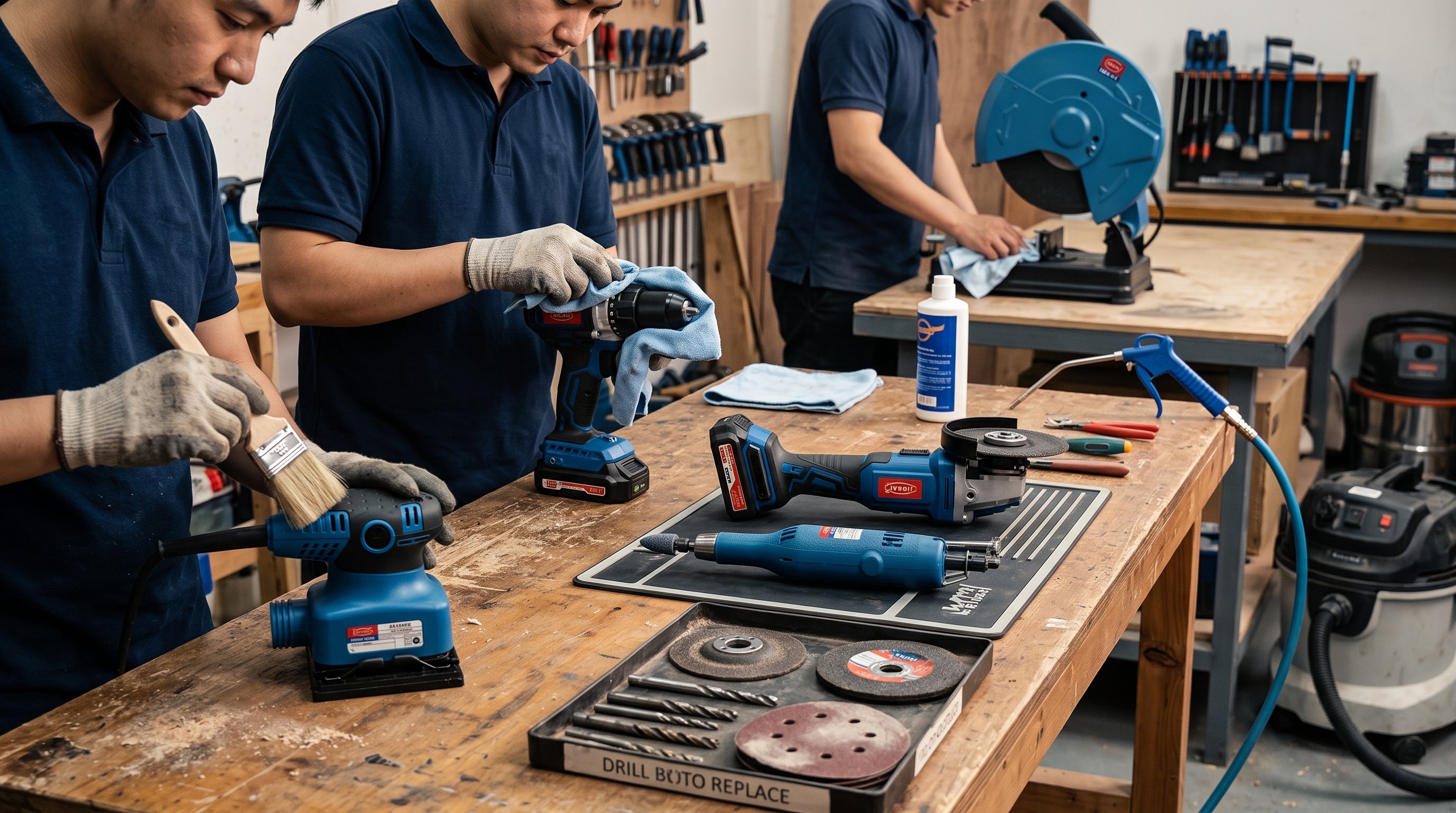
- Keep the shank clean: Remove dust and debris from the bit shank before inserting it into the chuck.
- Use the correct grease: Apply the appropriate amount of SDS shank grease according to the tool manufacturer's instructions. Proper lubrication helps reduce friction and wear.
- Inspect bits regularly: Replace bits that are excessively worn, damaged, cracked, or deformed.
- Don't force a blunt bit: A worn accessory can make the tool work harder while reducing drilling performance.
- Keep ventilation openings clear: Concrete dust can accumulate around power-tool ventilation openings. Keeping them clean helps maintain proper cooling.
- Use the correct accessory: An SDS-Plus machine requires SDS-Plus accessories. An SDS-Max machine requires SDS-Max accessories.
The correct combination of tool, bit, lubrication, and operating technique can help extend accessory and tool life. IDEAL's rotary-hammer guidance also recommends keeping tools clean and lubricating SDS shanks as specified by the manufacturer. To keep your tools performing at their best, check out our power tool maintenance guide for daily, weekly, and monthly checklists.
Frequently Asked Questions
Is SDS-Plus or SDS-Max better?
Neither is universally better. SDS-Plus is better for general drilling, anchoring, MEP work, and lighter applications. SDS-Max is better for larger holes, higher impact energy, and heavy-duty drilling and chiselling.
Can SDS-Max drill bigger holes than SDS-Plus?
Generally, yes. SDS-Max tools are designed for larger accessories and higher impact forces, making them better suited to larger-diameter drilling.
Is SDS-Plus enough for concrete?
Yes. SDS-Plus rotary hammers are highly capable for many concrete drilling applications. For example, the IDEAL ID HD2-26QC is rated for drilling up to 26mm in concrete and delivers 3J of impact energy.
Is SDS-Max only for demolition?
No. SDS-Max is also used for heavy-duty rotary hammer drilling. The IDEAL ID GSH388, for example, combines rotation with 15J of impact energy and a 45mm maximum drilling capacity.
What does SDS stand for?
SDS is commonly expanded as Slotted Drive System. The system uses specially shaped shanks and tool holders to transfer hammering forces efficiently while allowing quick accessory changes.
Which is better for MEP installation?
For most electrical, plumbing, and HVAC installation work involving conventional anchor and fixing holes, SDS-Plus is generally the more practical choice because of its compact size and maneuverability. For larger penetrations and demanding concrete work, SDS-Max may be more appropriate.
Should I buy SDS-Plus or SDS-Max for home renovation?
For most home renovation projects, SDS-Plus is likely to be the more versatile choice. A model such as the IDEAL ID HD2-26QC provides drilling, hammer drilling, and chiselling functions in a relatively compact platform. If your renovation involves substantial concrete breaking or very large holes, consider moving up to SDS-Max.
Final Verdict: SDS-Plus or SDS-Max?
The best SDS system is the one that matches your actual workload, not simply the most powerful machine you can buy.
Choose SDS-Plus if you need:
- Compact handling
- Lower operator fatigue
- Everyday concrete drilling
- Anchor and fixing holes
- MEP installation
- Renovation work
- Light chiselling
- Greater versatility
Choose SDS-Max if you need:
- Higher impact energy
- Larger drilling capacity
- Heavy-duty concrete drilling
- Large masonry holes
- Intensive chiselling
- Demanding construction applications
For everyday professional drilling, IDEAL's ID HD2-20SRE and ID HD2-26QC provide practical SDS-Plus options. When your work demands substantially more impact power and drilling capacity, the ID GBH7DE and ID GSH388 move into the SDS-Max category.
In short: SDS-Plus is the versatile all-rounder. SDS-Max is the heavy-duty specialist.
Before choosing your next rotary hammer, match the shank system, impact energy, drilling capacity, tool weight, and intended application to the jobs you actually perform. That is the simplest way to get better productivity without paying for power you may never use.
Ready to Choose Your Rotary Hammer?
Explore IDEAL's range of rotary hammers to find the right combination of power, drilling capacity, and SDS system for your next project.