

Choosing between a pneumatic die grinder vs electric die grinder is one of the most important decisions for professionals involved in metal fabrication, automotive repair, manufacturing, maintenance, and precision finishing. While both tools are designed for grinding, deburring, polishing, engraving, and shaping, they differ in power source, operating costs, portability, and the environments where they perform best.
The right choice isn't simply about which tool is more powerful, it's about selecting one that matches your workflow. Workshops equipped with compressed air systems often benefit from pneumatic models, while professionals looking for a convenient plug-and-use solution may find an electric die grinder more practical.
In this guide, we'll compare both options in detail, explain their advantages and limitations, explore their most common applications, and help you choose the right solution for your workshop. You'll also discover professional die grinder models from Ideal Power Tools designed to deliver reliable performance across a wide range of industrial and workshop applications.

Pneumatic vs Electric Die Grinder: At a Glance
If you're short on time, here's a quick comparison of the key differences.
| Feature | Pneumatic Die Grinder | Electric Die Grinder |
|---|---|---|
| Power Source | Compressed air | Electric motor |
| Best For | Continuous industrial use | General workshop and maintenance |
| Portability | Requires an air compressor | Simply plug in and use |
| Weight | Typically lighter | Slightly heavier due to the motor |
| Maintenance | Air system and lubrication required | Basic cleaning and cord inspection |
| Running Cost | Lower if compressed air is already available | No compressor required |
| Ideal Users | Fabricators, automotive workshops, manufacturers | Maintenance teams, installers, general workshops |
The comparison above provides a quick overview, but the best choice depends on your daily workload, workshop setup, and the type of applications you perform. Understanding how each tool works will help you make a more informed investment.
What Is a Die Grinder?
A die grinder is a compact, high-speed rotary tool used for precision grinding, deburring, polishing, engraving, sanding, and surface preparation. Unlike larger angle grinders that are primarily intended for heavy material removal, die grinders are designed for detailed work where accuracy and control are essential.
With the appropriate accessory, a die grinder can perform a wide range of finishing tasks on different materials, making it one of the most versatile tools in professional workshops.
If you're new to grinding tools and want to understand how die grinders compare with angle grinders and bench grinders, explore our Complete Guide to Angle, Die & Bench Grinders before choosing the right tool for your application.
Common accessories include:
- Carbide burrs
- Mounted grinding stones
- Flap wheels
- Wire brushes
- Polishing buffs
- Abrasive rolls
- Engraving and carving burrs
Because of this flexibility, die grinders are widely used in industries ranging from fabrication and automotive repair to woodworking, stone engraving, and artistic carving.
Common Applications of Die Grinders
One of the biggest advantages of a die grinder is its versatility. By simply changing the accessory, the same tool can handle a variety of precision tasks across different materials.
Some of the most common applications include:
- Deburring machined components
- Removing welding slag and spatter
- Smoothing rough metal edges
- Cleaning rust and corrosion
- Polishing stainless steel and aluminium
- Surface preparation before painting or powder coating
- Removing casting flash
- Porting engine components
- Precision wood carving and decorative detailing
- Stone engraving and marble finishing
- Sculpture carving and idol shaping using compatible carving burrs
As a result, die grinders are widely used in:
- Metal fabrication workshops
- Automotive repair and restoration
- Manufacturing facilities
- Engineering workshops
- Industrial maintenance
- Aluminium fabrication
- Woodworking and furniture manufacturing
- Stone and marble processing
- Sculpture and artistic craftsmanship
Selecting the right accessory is just as important as choosing the right tool. Always ensure that the accessory is compatible with your die grinder's collet size and operating speed while following the manufacturer's recommendations for safe and efficient operation.
How Does a Pneumatic Die Grinder Work?
A pneumatic die grinder, often referred to as an air die grinder, is powered by compressed air supplied from an air compressor. When the trigger is pressed, compressed air flows through the tool and drives an internal air motor, producing high rotational speeds required for precision grinding, deburring, polishing, and finishing.
Unlike electric models that rely on an electric motor, pneumatic die grinders maintain consistent performance during prolonged use, with the tool itself generally remaining cooler than comparable electric models. This makes them a preferred choice for workshops where the tool is used continuously throughout the day.
Since pneumatic models require an external air supply, they are commonly found in fabrication shops, automotive workshops, manufacturing plants, and industrial maintenance facilities where compressed air systems are already installed.
Why Professionals Choose Pneumatic Die Grinders
Pneumatic die grinders have earned their reputation in industrial environments because they combine lightweight handling with reliable performance during demanding applications. For businesses that already operate compressed air systems, they often provide an efficient and cost-effective solution for everyday finishing work.
Some of the key advantages include:
Lightweight and Comfortable to Use
Without a built-in electric motor, pneumatic die grinders are generally lighter than electric alternatives. The reduced weight helps minimise operator fatigue during extended grinding or polishing tasks, making them well suited for production environments where the tool is used for long periods.
Consistent Performance for Continuous Operation
Because compressed air powers the tool, pneumatic die grinders maintain steady performance even during prolonged use. They are an excellent choice for workshops where grinding, deburring, or polishing forms part of the daily production process.
Compact Design for Confined Areas
Many fabrication and automotive applications involve working inside frames, engine bays, pipework, or fabricated assemblies. Their compact body makes pneumatic die grinders easier to manoeuvre in these restricted spaces while maintaining good control.
Lower Long-Term Running Costs
For workshops that already operate a compressed air system, pneumatic die grinders can be economical to run because multiple pneumatic tools can share the same air supply.
Where Pneumatic Die Grinders Perform Best
Pneumatic die grinders are particularly effective in environments where reliability, productivity, and continuous operation are priorities.
Typical applications include:
- Metal fabrication and welding
- Automotive repair and body shops
- Manufacturing and production facilities
- Industrial maintenance
- Engineering workshops
- Aluminium fabrication
- Precision deburring of machined components
- Weld preparation and finishing
- Rust and corrosion removal
- Surface preparation before coating or painting
Professionals in these industries often prefer pneumatic tools because they integrate seamlessly into existing compressed air systems, helping maintain efficient workflows throughout the working day.
Recommended Pneumatic Die Grinders from Ideal Power Tools
Choosing the right pneumatic die grinder depends on the type of work you perform, the accessories you use, and the level of precision required. Ideal Power Tools offers professional models designed to meet the demands of workshops, fabrication facilities, and industrial users.
ID ADG66 Pneumatic Die Grinder
For professionals looking for a versatile straight die grinder for precision finishing, the Ideal Power Tools ID ADG66 delivers reliable performance for everyday workshop applications.
Key features include:
- Rated speed of 25,000 RPM
- Operating pressure of 90 PSI
- Compatible with 3 mm and 6 mm collets
- Compact and lightweight design for improved handling
The ID ADG66 is well suited for:
- Deburring metal components
- Grinding weld seams
- Surface finishing
- Polishing metal parts
- General fabrication work

Ideal ID ADG66 – High-speed performance for professional workshop applications.
Its lightweight construction and high operating speed make it a practical choice for professionals who require accuracy and consistent performance throughout the working day.
ID ADG88 Pneumatic Die Grinder
When applications require better access to tight or difficult-to-reach areas, the Ideal Power Tools ID ADG88 provides an effective solution.
Designed with an extended configuration, it offers greater accessibility without compromising precision.
Verified features include:
- Rated speed of 22,000 RPM
- Operating pressure of 90 PSI
- Compatible with 3 mm and 6 mm collets
- Extended reach for confined working areas
Recommended applications include:
- Internal grinding
- Precision deburring
- Automotive maintenance
- Fabrication work
- Component finishing

Ideal ID ADG88 – Reliable pneumatic performance with extended reach.
Its extended reach makes it particularly useful when working inside fabricated structures, engine compartments, and other restricted spaces where standard die grinders may be difficult to position.
Things to Consider Before Choosing a Pneumatic Model
Before investing in a pneumatic die grinder, make sure your workshop has a compressed air system capable of supplying the recommended air pressure and airflow. An undersized compressor can affect tool performance and reduce productivity.
It's also important to use clean, dry compressed air and follow the manufacturer's lubrication recommendations to maintain smooth operation and extend the life of the tool.
For workshops that already rely on compressed air for other equipment, a pneumatic die grinder is often a logical investment that combines lightweight handling with dependable performance.
How Does an Electric Die Grinder Work?
Unlike pneumatic models that rely on compressed air, an electric die grinder is powered by an electric motor. Simply connect the tool to a suitable power outlet, install the required accessory, and it's ready to perform precision grinding, deburring, polishing, engraving, and finishing tasks.
Because they don't require an air compressor, hoses, or air preparation equipment, electric die grinders are a practical solution for professionals who value convenience, mobility, and quick setup. They're widely used in maintenance departments, engineering workshops, general fabrication, and repair applications where compressed air isn't readily available.
Modern electric die grinders are designed to deliver consistent performance and precise control, making them suitable for both professional and light industrial applications.
Why Choose an Electric Die Grinder?
Electric die grinders are ideal for professionals who need a dependable tool that's easy to set up and capable of handling a wide variety of finishing applications. Their plug-and-play operation eliminates the need for additional equipment, making them especially useful for workshops where flexibility is important.
Quick and Convenient Setup
One of the biggest advantages of an electric die grinder is its simplicity. There's no need to connect air hoses or wait for an air compressor to build pressure. This allows users to begin work immediately, making electric models ideal for maintenance work, repair jobs, and smaller workshops.
Reliable Performance
Modern electric die grinders provide stable operating speeds that support precision grinding, polishing, and finishing. Whether you're removing burrs from machined components or preparing metal surfaces before coating, they offer dependable performance for everyday workshop tasks.
Portable for Different Work Environments
Since they only require a suitable power source, electric die grinders are easier to transport between workstations or job sites than pneumatic models that depend on compressed air systems.
Lower Initial Investment
For workshops without an existing compressed air system, purchasing an electric die grinder is generally more cost-effective. There's no need to invest in compressors, air hoses, filters, or lubrication systems, reducing the overall equipment cost.
Where Electric Die Grinders Perform Best
Electric die grinders are commonly used across a wide range of professional applications, including:
- General workshop maintenance
- Metal finishing and polishing
- Deburring fabricated and machined parts
- Rust and paint removal
- Surface preparation
- Engineering and repair work
- Light fabrication projects
- Wood carving and decorative shaping
- Stone engraving and sculpture detailing using compatible accessories
Their combination of portability and ease of use makes them an excellent choice for professionals who require precision without the additional infrastructure associated with pneumatic tools.
Recommended Electric Die Grinders from Ideal Power Tools
Ideal Power Tools offers professional electric die grinders designed for precision, reliability, and everyday workshop performance. Whether you're carrying out detailed finishing work or general maintenance, these models provide dependable results across a variety of applications.
ID DG02-6 Electric Die Grinder
The Ideal Power Tools ID DG02-6 is designed for professionals who require high-speed precision for grinding, deburring, polishing, and finishing applications.
Powered by a 400W motor, it delivers a no-load speed of 27,000 RPM and supports both 3 mm and 6 mm collets, giving users the flexibility to work with a wide range of compatible accessories.
The ID DG02-6 is recommended for:
- Precision grinding
- Deburring metal components
- Surface finishing
- General workshop applications
- Metal polishing

Ideal ID DG02-6 – Compact design with high-speed precision for every task.
Its combination of power and versatility makes it a reliable solution for workshops that require consistent day-to-day performance.
ID DG6S Electric Die Grinder
For lighter-duty precision work, the Ideal Power Tools ID DG6S provides a compact and practical solution.
Equipped with a 240W motor, a no-load speed of 26,000 RPM, and a 6 mm collet, it is well suited for detail finishing and maintenance applications where control and manoeuvrability are important.
Recommended applications include:
- Detail grinding
- Polishing
- Maintenance work
- Precision finishing
- Workshop repairs

Ideal ID DG6S – Lightweight performance for detailed metal finishing.
Its compact design makes it particularly suitable for users who need an easy-to-handle tool for routine workshop tasks.
Pneumatic vs Electric Die Grinder: Side-by-Side Comparison
Now that we've explored both tool types individually, let's compare their key differences to help you determine which option best suits your workshop.
| Feature | Pneumatic Die Grinder | Electric Die Grinder |
|---|---|---|
| Power Source | Compressed air | Electric motor |
| Setup | Requires air compressor and hose | Plug into a power outlet |
| Weight | Generally lighter | Slightly heavier |
| Continuous Operation | Excellent | Suitable for most workshop tasks |
| Portability | Limited by air hose | Easy to move between work areas |
| Maintenance | Air system maintenance and lubrication | Basic cleaning and inspection |
| Initial Investment | Higher if no compressor is available | Lower for new workshops |
| Best For | Fabrication, manufacturing, automotive workshops | Maintenance, repairs, general workshop use |
The comparison clearly shows that there isn't a universal winner. A pneumatic die grinder is often the preferred choice for workshops with an established compressed air system and continuous production requirements, while an electric die grinder offers greater convenience and flexibility for professionals who need a straightforward, portable solution.
How to Choose the Right Die Grinder
Choosing between a pneumatic and an electric die grinder ultimately comes down to how and where the tool will be used. Instead of focusing solely on motor speed or purchase price, consider your workshop setup, daily workload, and the applications you'll perform most often.
Consider Your Workshop Infrastructure
If your workshop already operates a compressed air system, a pneumatic die grinder is often the more practical choice. It integrates easily with existing equipment and is well suited to environments where grinding, deburring, and finishing are performed throughout the day.
If you don't have access to compressed air, an electric die grinder offers a straightforward solution without the additional investment in an air compressor, hoses, or air preparation equipment.
Match the Tool to Your Workload
For continuous professional use in fabrication shops, automotive workshops, or manufacturing facilities, pneumatic models are an excellent choice due to their lightweight construction and ability to operate consistently during extended use.
For maintenance work, repair jobs, and general workshop applications, electric die grinders provide the convenience of quick setup and reliable performance without additional infrastructure.
Choose the Right Accessories
The versatility of a die grinder depends on using the correct accessory for the task. Carbide burrs, mounted grinding stones, flap wheels, wire brushes, polishing buffs, and carving burrs are all designed for different applications.
Always ensure the accessory matches your die grinder's collet size and is rated for the tool's operating speed.
Think Beyond the Purchase Price
The initial cost of the tool is only one part of the investment. If you're considering a pneumatic model, remember to account for the air compressor and related equipment if they're not already available.
On the other hand, while an electric die grinder generally has a lower setup cost, choosing a professional-grade model is essential for long-term reliability and consistent performance.
Maintenance Tips for Longer Tool Life
Regular maintenance not only helps extend the life of your die grinder but also ensures safe operation and consistent performance.
Pneumatic Die Grinders
To keep your pneumatic die grinder operating efficiently:
- Use clean, dry compressed air.
- Operate within the recommended air pressure.
- Lubricate the tool according to the manufacturer's instructions.
- Inspect air hoses and fittings regularly for wear or leaks.
- Drain moisture from the air compressor tank to reduce water contamination in the air supply.
Electric Die Grinders
For electric models:
- Keep the ventilation openings free from dust and debris.
- Inspect the power cord before each use.
- Use accessories suitable for the application and operating speed.
- Store the tool in a clean, dry location.
- Follow the maintenance recommendations provided in the user manual.
Proper maintenance improves safety, extends service life, and helps maintain consistent grinding performance.
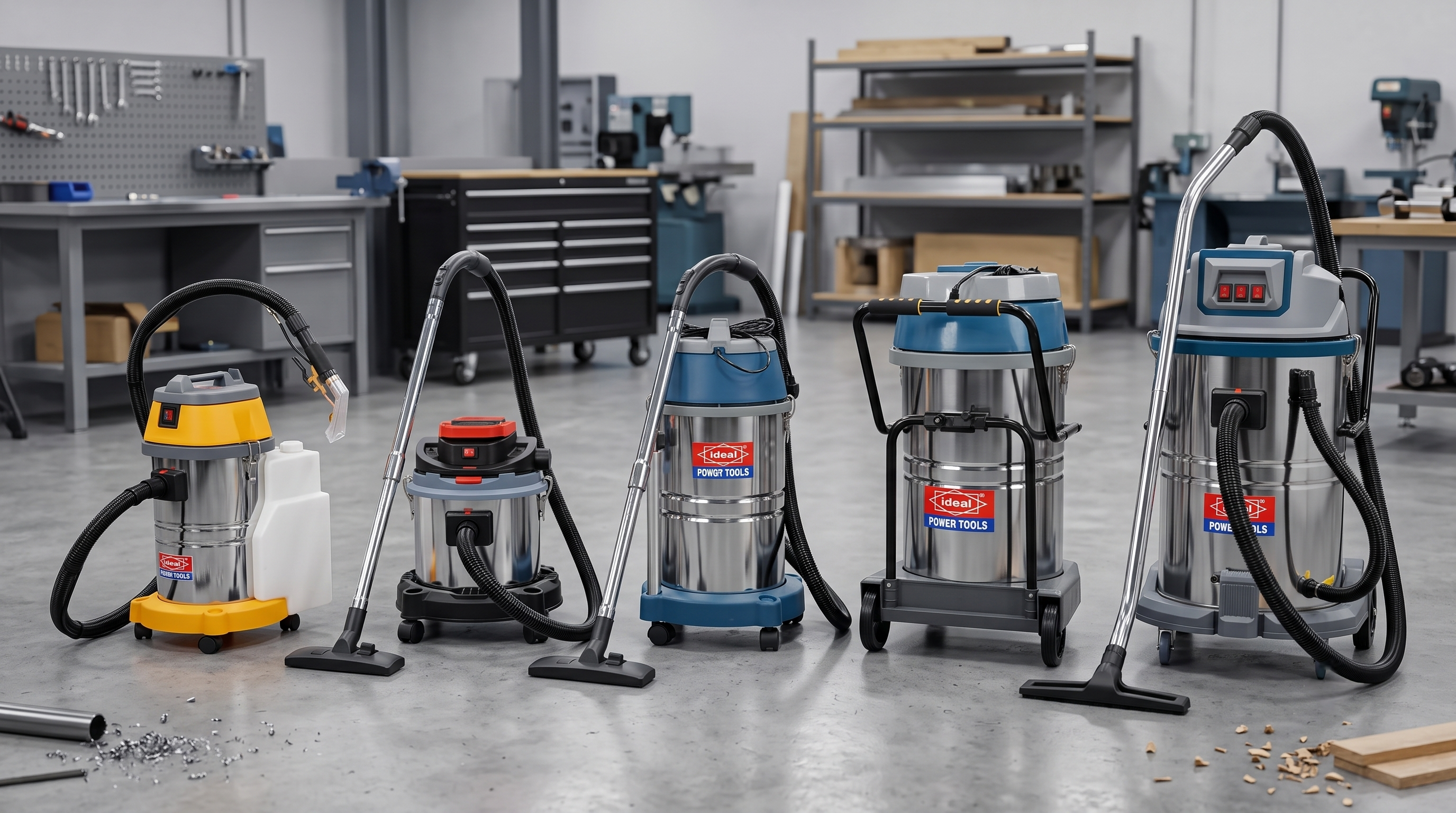
Keeping your work area clean is equally important. Metal dust, grinding debris, and fine particles can affect both tool performance and workplace safety. Using an industrial vacuum cleaner helps remove dust efficiently and creates a cleaner, more productive working environment. Learn how to choose the right industrial vacuum cleaner in our guide to the Best Vacuum Cleaner for Construction, Workshop & Garage Cleaning.
Common Mistakes to Avoid
Selecting the right die grinder is only part of achieving good results. Avoiding common mistakes can improve efficiency, reduce unnecessary wear, and help you get the best performance from your tool.
Some of the most common mistakes include:
- Choosing a pneumatic model without checking whether your compressor can supply the required air pressure and airflow.
- Selecting accessories that don't match the tool's collet size.
- Using grinding or polishing accessories beyond their recommended speed rating.
- Applying excessive pressure instead of allowing the accessory to do the work.
- Neglecting routine cleaning and maintenance.
- Choosing a tool based solely on price rather than the intended application.
A well-matched tool, used correctly and maintained regularly, will provide more reliable performance and a longer service life.
Safe operation is just as important as selecting the right tool. Before using any die grinder, inspect the tool and accessories, wear appropriate PPE, and ensure your workpiece is securely clamped. Following a consistent safety routine helps reduce the risk of accidents while improving both productivity and finishing quality. For a complete pre-use checklist and essential job site safety practices, explore our Power Tool Safety Checklist.
Frequently Asked Questions
What is the main difference between a pneumatic die grinder and an electric die grinder?
The primary difference is the power source. Pneumatic die grinders operate using compressed air supplied by an air compressor, while electric die grinders are powered by an electric motor connected to a suitable power outlet.
Which die grinder is better for metal fabrication?
Both types can be used for metal fabrication. Workshops with compressed air systems often prefer pneumatic models for continuous professional use, while electric models are suitable for general fabrication and repair work.
Can I use a pneumatic die grinder without an air compressor?
No. Pneumatic die grinders require a compatible air compressor to operate.
Is an electric die grinder suitable for professional use?
Yes. Professional-grade electric die grinders are suitable for grinding, deburring, polishing, and finishing applications across many workshop environments. The right choice depends on your workload and working conditions.
What accessories can be used with a die grinder?
Depending on the model and collet size, compatible accessories include:
- Carbide burrs
- Mounted grinding stones
- Flap wheels
- Wire brushes
- Polishing buffs
- Abrasive rolls
- Engraving and carving burrs
Always use accessories that are suitable for both the tool and the intended application.
Can a die grinder be used for wood carving or sculpture work?
Yes. When fitted with compatible carving burrs or engraving accessories, a die grinder can be used for precision wood carving, decorative shaping, stone engraving, sculpture carving, and idol shaping. Always use accessories designed for the material being worked on and follow the manufacturer's safety recommendations.
Conclusion
Choosing between a pneumatic and an electric die grinder ultimately depends on your workshop setup, workload, and the applications you perform most often. Pneumatic models are ideal for workshops with compressed air systems that require continuous professional use, while electric models offer a convenient and versatile solution for general workshop, maintenance, and repair tasks.
By understanding the differences in performance, operating costs, maintenance, and suitability, you can select the right die grinder to improve efficiency and achieve better finishing results.
Looking for the right tool for your application? Explore Ideal Power Tools’ die grinder collection for reliable solutions built for professional grinding and finishing tasks.