

IDEAL POINTED CHISEL [18 X 400] [SDS MAX] DEMOLITION HAMMER ACCESSORY - 20335

 Chat with us
Choose options
Professional Demolition Precision — Built for the Toughest Job Sites
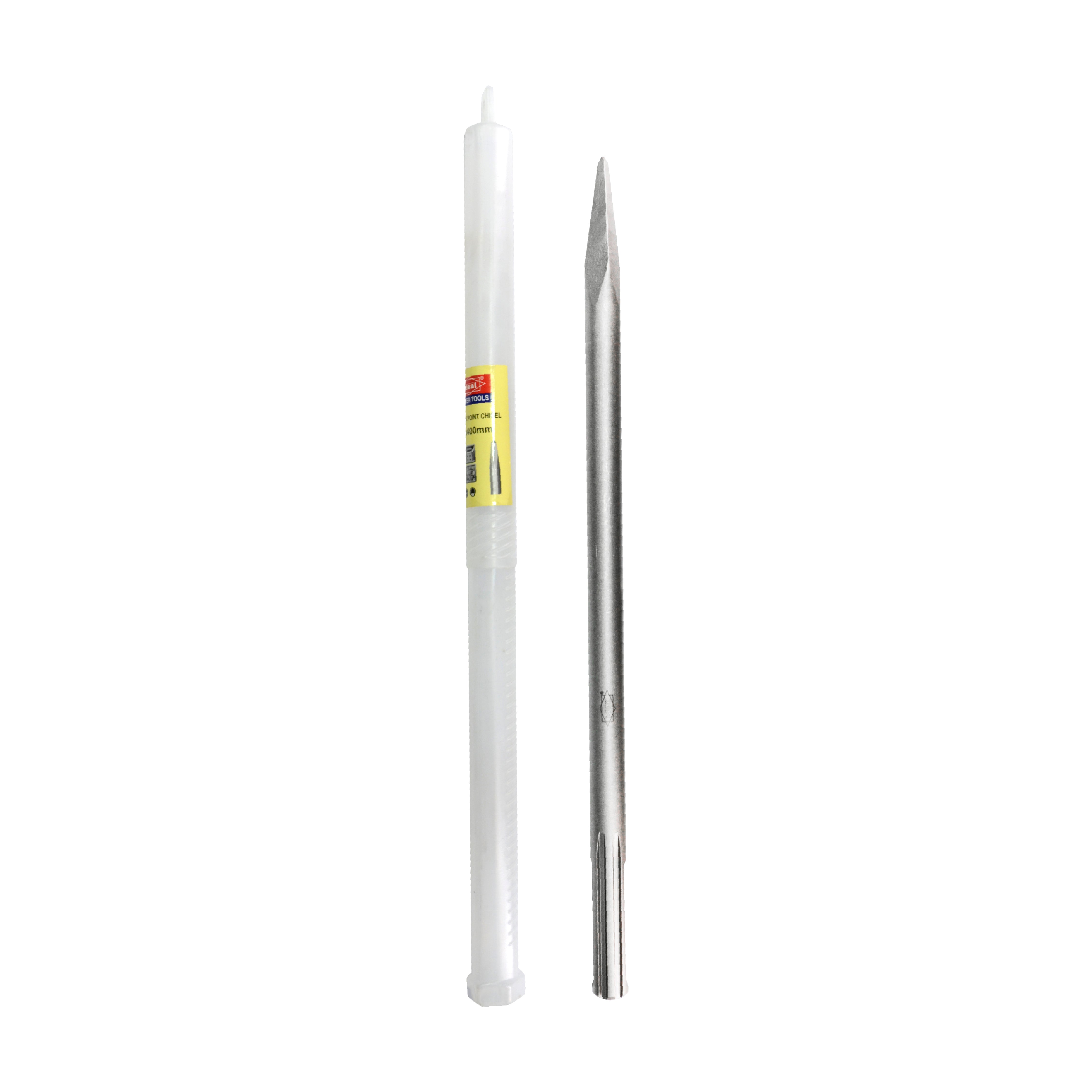
The Ideal Pointed Chisel 18 x 400 SDS Max (Model 20335) is a professional-grade demolition hammer accessory engineered for precision material removal in demanding construction and renovation environments. Featuring an 18mm diameter tip and a 400mm overall length, this SDS Max chisel delivers targeted, controlled strikes for mortar removal, concrete breaking, and brickwork chasing. Built with a heat-treated steel tip and a robust SDS Max shank, it is designed to withstand the high-impact forces of professional rotary and demolition hammers.
| Key Features | Perfect For |
|---|---|
|
|
- SDS Max Interface for Maximum Power Transfer: The SDS Max locking shank system ensures a firm, vibration-resistant connection to compatible demolition hammers and rotary hammers, enabling full transmission of impact energy directly to the work surface — eliminating slippage and reducing operator fatigue during extended use.
- 18mm Pointed Tip for Targeted Impact: The narrow 18mm pointed chisel tip concentrates striking force into a precise contact area, making it ideal for initiating cracks in dense concrete, removing stubborn mortar joints, and working in tight spaces where flat or wide chisels cannot reach effectively.
- 400mm Extended Length for Deep Reach: At 400mm total length, this chisel provides the extended working depth needed for demolishing thick concrete slabs, breaking through block walls, and accessing recessed areas in structural demolition — without requiring the operator to reposition frequently.
- Heat-Treated Alloy Steel for Extreme Durability: Manufactured from high-grade alloy steel and subjected to a precision heat-treatment process, the chisel achieves an optimal balance of surface hardness and core toughness — resisting tip deformation, chipping, and premature wear even under continuous high-frequency impact loads.
- Precision-Ground Geometry for Controlled Demolition: The precision-ground pointed profile is engineered to direct force along a defined axis, allowing professionals to perform controlled material removal without causing unintended structural damage to surrounding surfaces — critical in renovation and refurbishment projects where adjacent materials must be preserved.
- Broad Compatibility with SDS Max Demolition Hammers: Designed to the universal SDS Max standard, this chisel is compatible with leading professional demolition hammer brands, making it a versatile addition to any contractor's or tradesperson's toolkit without the need for adapters or special fittings.
The Ideal Pointed Chisel 18 x 400 SDS Max (20335) is supplied as a single chisel accessory and is compatible with all SDS Max-interface demolition and combination hammers. This product carries the quality assurance standards expected of professional-grade Ideal power tool accessories, ensuring consistent performance across construction, civil engineering, and renovation applications.
General Purchase & Comparison Queries
What is the Ideal Pointed Chisel 18 x 400 SDS Max (20335) and what does it do?
The Ideal Pointed Chisel 18 x 400 SDS Max (Model 20335) is a professional demolition accessory designed for use with SDS Max rotary and demolition hammers. Its 18mm pointed tip concentrates impact force for precise material removal tasks including concrete breaking, mortar joint removal, brickwork chasing, and tile demolition. The 400mm length provides extended reach for deep or confined work areas.
What is the difference between an SDS Max chisel and an SDS Plus chisel?
SDS Max and SDS Plus are two different shank standards used in rotary and demolition hammers. SDS Max chisels have a larger 18mm shank diameter with three open slots, designed for heavy-duty professional demolition hammers (typically 5kg and above) that deliver higher impact energy. SDS Plus chisels have a smaller 10mm shank and are suited to lighter rotary hammers for drilling and light chiselling. The Ideal 20335 uses the SDS Max interface and is intended for professional-grade, high-impact demolition work.
Is this chisel compatible with all SDS Max demolition hammers?
Yes. The Ideal Pointed Chisel 20335 conforms to the universal SDS Max shank standard, making it compatible with SDS Max demolition and combination hammers from all major professional brands. No adapters or special fittings are required — simply insert the shank into any SDS Max chuck and it locks securely in place for immediate use.
Product-Specific and Usage Queries
What materials can the Ideal Pointed Chisel 18 x 400 SDS Max cut or break?
This chisel is designed for use on a wide range of hard construction materials including reinforced concrete, masonry blocks, natural stone, brick, ceramic and porcelain tiles, and hardened mortar joints. The precision-ground 18mm pointed tip concentrates impact energy for targeted penetration, making it particularly effective for mortar removal, crack initiation in concrete, and brickwork chasing for conduit or pipe routing.
Why is the pointed tip design better for certain demolition tasks than a flat chisel?
A pointed chisel tip concentrates the full impact force of the hammer into a very small contact area, generating extremely high localised pressure. This makes it superior to a flat chisel for tasks that require crack initiation, deep penetration into dense concrete, mortar joint removal, and working in tight or recessed areas. Flat chisels distribute force over a wider surface and are better suited for surface scaling or material removal across a broad area, whereas the pointed profile excels at precision demolition and targeted breaking.
How long is the chisel and why does the 400mm length matter?
The Ideal Pointed Chisel 20335 measures 400mm in total length. This extended length is particularly valuable when working on thick concrete slabs, deep block walls, or in situations where the operator needs to maintain distance from the work surface — such as when breaking material at floor level or in confined spaces. The additional length also reduces the frequency of repositioning during extended demolition tasks, improving overall productivity and operator comfort.
Problem/Solution-Oriented Queries
The chisel tip is wearing down quickly — what could be causing this?
Accelerated tip wear is typically caused by one of three factors: using the chisel on materials harder than its rated capacity (such as extremely high-strength reinforced concrete or hardened steel), operating the hammer at incorrect settings (e.g., rotation mode instead of pure hammer mode), or using the chisel with an incompatible or underpowered hammer. Ensure your demolition hammer is set to chisel-only (hammer) mode with rotation disengaged, and that the machine delivers sufficient impact energy for the material being worked. The heat-treated alloy steel of the Ideal 20335 is engineered for professional-grade durability, but correct tool pairing and operating mode are essential for maximum service life.
The chisel is not locking securely into my SDS Max hammer — how do I fix this?
If the SDS Max chisel shank is not locking correctly, first ensure the chuck is fully open before insertion — pull back the chuck collar, insert the shank fully until you feel it click into place, then release the collar. If the issue persists, inspect the chuck jaws and locking balls for wear or debris, and clean the shank slots on the chisel. Confirm that your hammer uses a genuine SDS Max interface and not an SDS Plus or proprietary system. If the chuck mechanism is worn, it may require servicing by a qualified tool repair technician.
I need to remove mortar between bricks without damaging the bricks — is this the right chisel?
Yes, the Ideal Pointed Chisel 18 x 400 SDS Max (20335) is well-suited for mortar joint removal and repointing preparation. The narrow 18mm pointed tip allows you to direct impact precisely along the mortar joint, minimising the risk of striking and damaging adjacent brickwork. For best results, work at a low to medium hammer setting, keep the chisel aligned with the mortar joint, and use short, controlled bursts rather than sustained high-power impacts. This technique preserves the integrity of the surrounding bricks while efficiently clearing the joint for repointing.