

IDEAL MIXER ROD [ID PM1200] PAINT MIXER ACCESSORY - 28824

 Chat with us
Choose options
Professional Mixing Performance. Built to Outlast the Job Site.
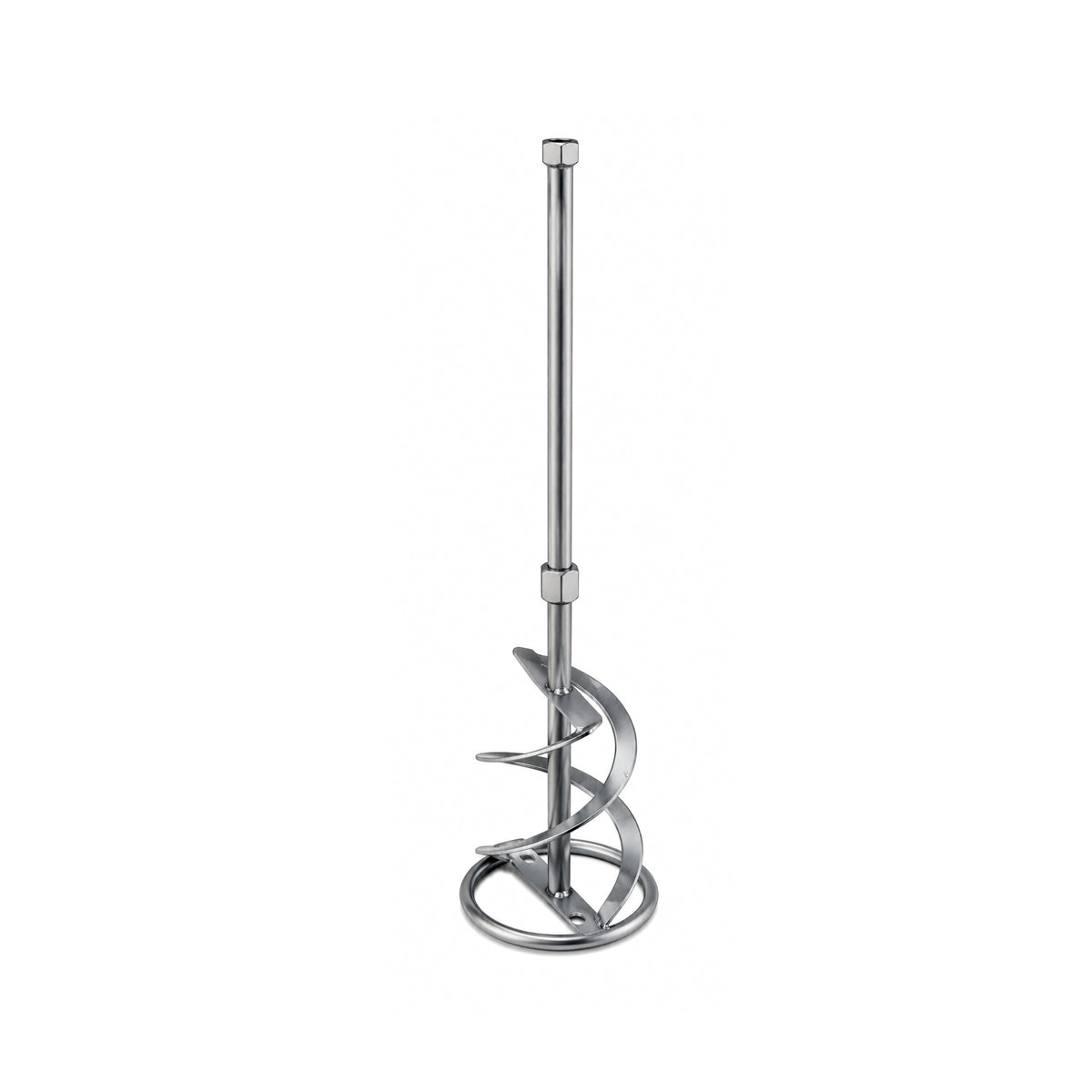
The IDEAL Mixer Rod (ID PM1200) is a professional-grade spiral helical mixing paddle engineered as a direct replacement spare part for the IDEAL ID PM1200 Electric Mixer and any standard M14 thread mixer. Built from heavy-duty galvanized high-grade steel, this 590mm mixing rod delivers consistent, lump-free results across paints, varnishes, epoxy resins, plaster, mortar, and adhesives, making it an essential tool for professional contractors and tradespeople.
| Key Features | Perfect For |
|
|
- Direct-Fit M14 Threaded Male Connection: The spindle thread diameter of 14mm (M14) provides a precision-engineered fit onto the IDEAL ID PM1200 drive unit and any standard M14 mixer, eliminating slippage under sustained high-torque operation — critical when mixing dense mortar or thick epoxy without interruption.
- 590mm Overall Length with 120mm Max Paddle Diameter: The 590mm rod length reaches the base of standard mixing buckets while the 120mm maximum stirring paddle diameter sweeps a wide mixing arc, ensuring no unmixed pockets remain in the corners or bottom of the container.
- Dual-Blade Helical Ribbon Spiral Geometry: The engineered spiral/helical paddle layout creates a powerful bottom-to-top helical vortex flow pattern, continuously drawing settled pigment, aggregate, or resin from the container floor upward, delivering a homogeneous, lump-free mixture every time.
- Heavy-Duty Galvanized High-Grade Steel Construction: Finished with a protective zinc coating, the rod resists rust, chemical corrosion from solvents and resins, and mechanical wear from abrasive aggregates in plaster and mortar — maintaining structural integrity across thousands of mixing cycles.
- Integrated Bottom Protective Ring: A smooth outer guard ring at the base of the paddle prevents direct metal-to-bucket contact, protecting both your mixing containers and the paddle blades from premature wear and scratching during vigorous mixing sessions.
- Precision-Balanced Center Shaft: The machined hexagonal/round steel center shaft is balanced to minimize radial runout, significantly reducing vibration transmitted back to the mixer motor — extending the service life of both the paddle and the ID PM1200 drive unit.
- Net Weight of 1 kg: At just 1 kg, the rod adds minimal weight to the mixer assembly, reducing operator fatigue during extended mixing tasks without compromising the structural rigidity needed for heavy-duty applications.
This mixer rod is designed for compatibility with the double-insulated ID PM1200 Electric Mixer, meaning the electrical parts of the connected ID PM1200 drive unit are fully isolated from the outer casing — the rod itself is a mechanical component designed to work within that safe system. It is supplied as a single Spiral/Helical Mixer Rod (1 piece), ready for immediate installation onto your existing M14-compatible mixer.
General Purchase & Comparison Queries
Is this mixer rod compatible with mixers other than the IDEAL ID PM1200?
Yes. The IDEAL Mixer Rod (ID PM1200) uses a standard M14 male threaded spindle connection with a 14mm thread diameter, which is the industry-standard fitting used across a wide range of professional electric mixers. As long as your mixer drive unit accepts an M14 threaded paddle, this rod will fit securely. Always verify your mixer's spindle thread specification before purchasing.
Why choose a galvanized steel mixer rod over a standard steel one?
Galvanized (zinc-coated) steel offers significantly superior durability compared to bare steel in mixing applications. The zinc plating acts as a sacrificial barrier, protecting the underlying steel from rust caused by water-based materials like plaster and mortar, and from chemical corrosion caused by solvents in epoxy resins and varnishes. For professionals mixing daily, a galvanized rod maintains its structural integrity and hygiene far longer, reducing replacement frequency and total cost of ownership.
What materials can this mixer rod handle?
This rod is designed for a broad range of professional-grade materials including paints, varnishes, epoxy resins, plaster, mortar, and adhesives. The helical vortex mixing pattern is particularly effective for dense, viscous materials that tend to settle — such as pigmented paints and aggregate-heavy mortars — ensuring a fully homogeneous mixture without requiring manual pre-stirring.
Product-Specific and Usage Queries
How does the helical spiral design improve mixing performance?
The dual-blade helical ribbon spiral geometry is engineered to create a bottom-to-top vortex flow pattern within the mixing container. Unlike flat disc paddles that only agitate material horizontally at one level, the helical design continuously draws dense, settled material — such as pigment, aggregate, or resin hardener — up from the container floor and folds it through the mixture. This results in a faster, more thorough, lump-free blend with significantly less mixing time required.
Will this paddle scratch or damage my mixing bucket?
No. The integrated bottom protective ring is a smooth outer guard that surrounds the base of the helical blades. This ring acts as a standoff, preventing the metal blades from making direct contact with the interior walls and base of your mixing bucket. This protects both your plastic or metal mixing containers from scratching and gouging, and also prevents premature wear on the paddle blades themselves during normal operation.
What is the correct way to install the mixer rod onto the ID PM1200?
Ensure the ID PM1200 mixer is switched off and unplugged before installation. Insert the M14 male threaded end of the mixer rod into the drive unit's chuck or spindle and tighten securely by hand or with the appropriate locking mechanism on your machine. The threaded fitting connection type ensures a firm, wobble-free engagement. Do not over-torque the connection. Once secured, check for any lateral movement before powering on, and always start at a low speed setting before increasing to working RPM.
Problem/Solution-Oriented Queries
My mixer is vibrating excessively — could the paddle be the cause?
Yes, excessive vibration is often caused by a bent, worn, or imbalanced mixing paddle. The precision-balanced center shaft of this IDEAL Mixer Rod is machined to minimize radial runout — the slight wobble that occurs when a shaft is not perfectly centered during rotation. If your current paddle is damaged or unbalanced, replacing it with this rod should noticeably reduce vibration, relieving strain on both the operator and the mixer's motor and bearings, extending machine service life.
The material at the bottom of my bucket keeps settling — how does this rod fix that?
Sediment settling is a common problem when using flat or inefficient paddle designs that only agitate material in the middle zone of the container. The helical ribbon spiral geometry of this rod generates a bottom-to-top vortex that actively scoops and lifts dense material from the container floor on every rotation. Combined with the 590mm rod length reaching deep into the bucket and the 120mm paddle diameter sweeping a wide arc, settled pigment, aggregate, or resin is continuously re-incorporated into the mixture, eliminating dead zones entirely.
How do I know when the mixer rod needs to be replaced?
Key signs that your mixer rod requires replacement include: visible bending or deformation of the center shaft or blades; surface rust or pitting through the zinc coating indicating the steel beneath is compromised; increased vibration during operation suggesting the shaft balance has been lost; or reduced mixing efficiency where materials are no longer being fully incorporated even at correct speeds. Replacing a degraded rod promptly prevents further stress on the ID PM1200 drive unit and ensures consistent mixing quality on every job.
Spiral/Helical Mixer Rod (1 Pcs)