

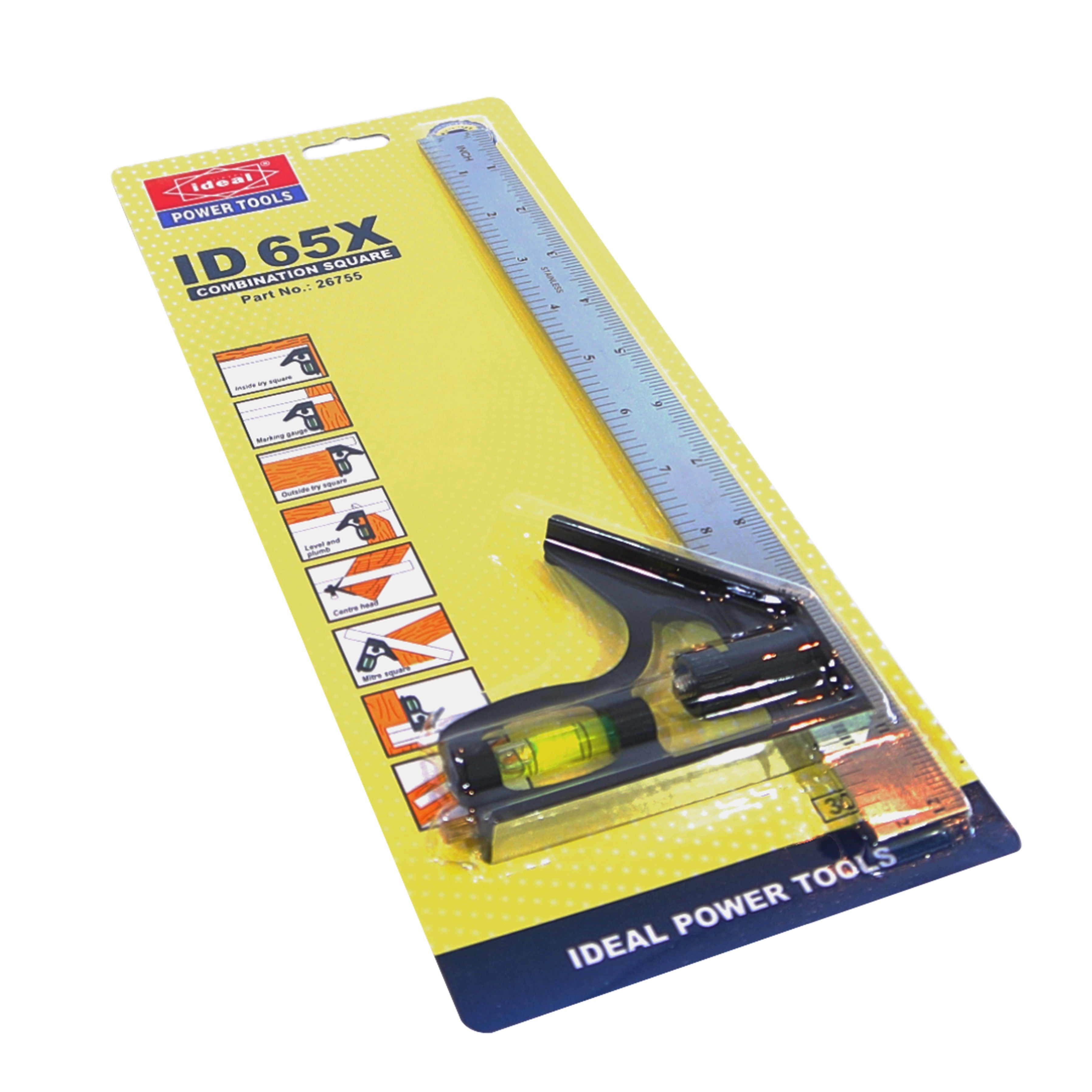
IDEAL [ID 65X] COMBINATION SQUARE - 26755


 Chat with us
Choose options
One Tool. Four Functions. Zero Compromise on Precision.
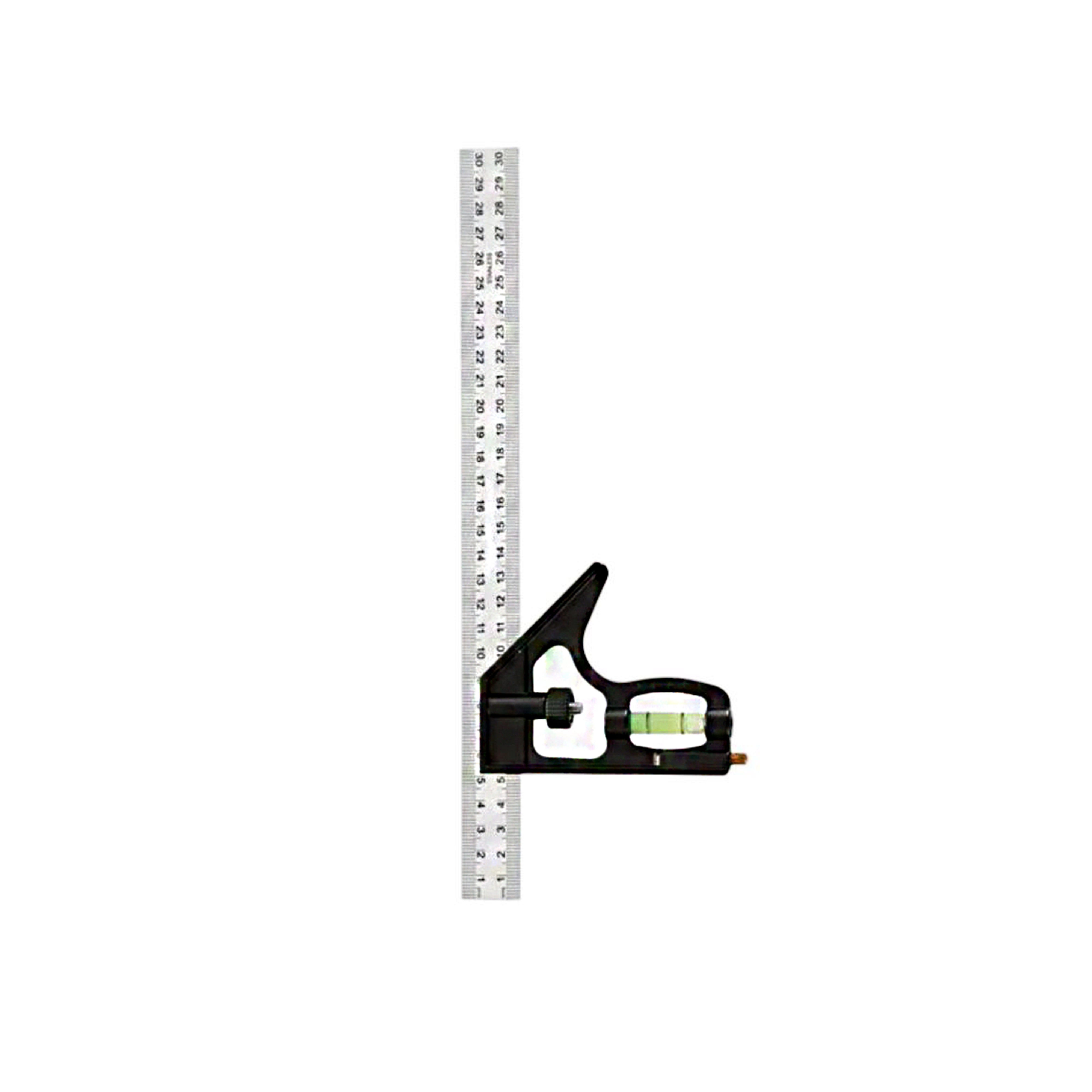
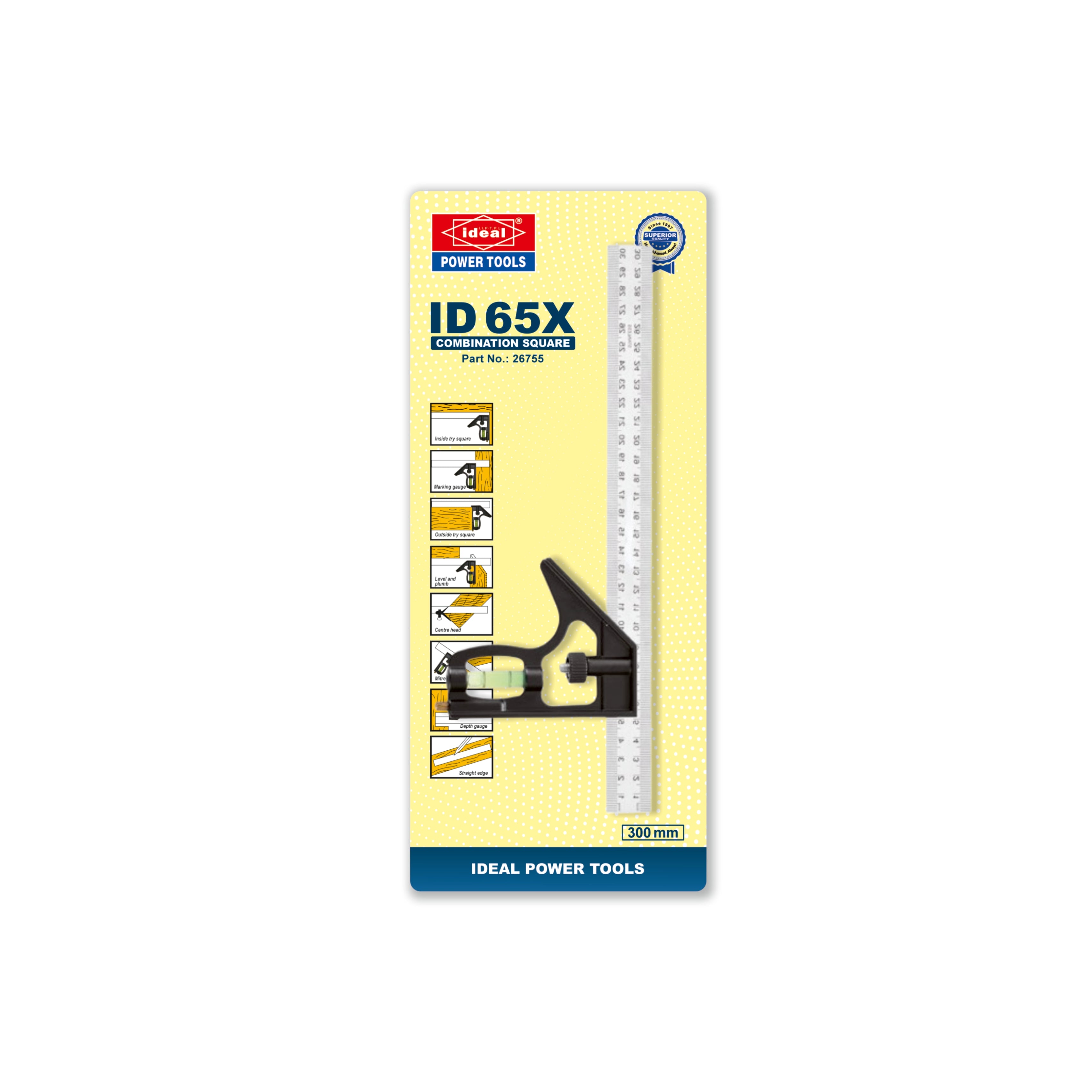
The 300mm Combination Square is a precision-engineered, multi-function measuring tool built for professionals and serious craftsmen. Combining a stainless steel rule, an adjustable cast metal head, an integrated spirit level, and a hardened steel scribing pin, this compact 200g instrument replaces four separate tools in one. Whether you're squaring timber joints, setting miter angles, gauging depths, or scribing cut lines on metal, this combination square delivers accurate, repeatable results every time, certified to ISO 9001:2015 quality standards.
| Key Features | Perfect For |
|---|---|
|
|
- 300mm Stainless Steel Blade with Dual-Scale Graduations: The hardened stainless steel rule measures 300mm in length and features permanently etched metric and imperial markings that resist wear, fading, and corrosion. The fine graduation lines ensure accurate readings whether you're working in millimetres or inches, making this tool equally suited for international job sites and workshops.
- Adjustable Cast Metal Head with Knurled Locking Nut: The precision-machined cast metal square head slides freely along the full length of the blade and can be locked firmly at any position using the knurled thumb nut. This allows the tool to function as a standard try square at the end of the rule, or as a depth gauge or height gauge when the head is positioned mid-blade, eliminating the need for separate gauging tools.
- Integrated Spirit Level Bubble Vial: A built-in bubble level vial is housed directly within the square head, enabling the user to simultaneously check that a surface is perfectly horizontal (level) or vertical (plumb) while squaring or marking. This dual-purpose functionality is especially valuable during installation work, shelf fitting, and structural framing where both squareness and levelness must be verified together.
- Hardened Steel Scribing Pin for Accurate Layout Lines: Stored neatly inside the handle when not in use, the included hardened steel scribe pin can be deployed to scratch precise, fine layout lines directly onto metal, timber, or composite surfaces. Unlike pencil marks that smudge or disappear, scribed lines remain visible throughout the cutting and machining process, ensuring your cut lines stay accurate from marking to completion.
- Compact, Lightweight Design at Just 200g: Weighing only 200 grams with a 300mm blade length, this combination square is engineered for portability without sacrificing rigidity or durability. The compact form factor fits easily into a tool belt or apron pocket, making it the ideal on-site measuring companion for carpenters, plumbers, electricians, and general contractors who need reliable precision throughout the working day. Manufactured under an ISO 9001:2015 certified quality management system, every unit is built to consistent, verified standards, and the complete kit includes the stainless steel ruler, the adjustable square head with integrated level, and the scribing pin, giving you everything needed straight out of the box.
General Purchase & Comparison Queries
What makes a combination square better than a standard try square?
A standard try square is fixed and can only check 90° angles. A combination square does significantly more: the sliding, lockable head lets it function as a try square, miter square (45°), depth gauge, and height gauge all in one tool. This one also adds a built-in spirit level and a scribing pin, meaning you can mark, measure, and level simultaneously — something a basic try square simply cannot do.
Is this combination square suitable for both woodworking and metalworking?
Yes. The stainless steel blade resists corrosion from cutting fluids and workshop moisture, making it durable in metalworking environments. The hardened steel scribing pin is specifically designed to mark layout lines on metal surfaces where a pencil would not leave a visible or lasting mark. For woodworking, the etched graduations and adjustable head make it ideal for joinery, cabinet making, and furniture construction.
What quality standard is this combination square manufactured to?
This combination square is manufactured under an ISO 9001:2015 certified Quality Management System. ISO 9001:2015 is the internationally recognised benchmark for consistent product quality and manufacturing process control. This means every unit is produced to verified, repeatable standards — giving you confidence that the squareness, graduation accuracy, and build quality meet professional-grade expectations.
Product-Specific and Usage Queries
How do I use the combination square as a depth gauge?
To use it as a depth gauge, loosen the knurled locking nut on the cast metal head and slide the head along the blade until the end of the blade protrudes by the depth you wish to measure or replicate. Tighten the nut to lock the blade in position. Place the flat face of the head against the reference surface and the blade tip will indicate or transfer the exact depth — useful for setting router bit depths, checking mortise depths, or marking consistent rebate depths across multiple pieces.
Does the spirit level work in both horizontal and vertical orientations?
Yes. The integrated bubble vial in the square head is designed to check both horizontal (level) and vertical (plumb) surfaces. Simply orient the tool accordingly — lay it flat to check a horizontal surface, or hold it upright against a vertical surface. When the bubble sits centred between the two reference lines, the surface is true. This is particularly useful when installing shelving, setting posts, or aligning structural elements during construction.
How do I use the scribing pin, and where is it stored?
The hardened steel scribing pin is stored inside the handle of the square head when not in use, keeping it protected and always at hand. To use it, pull the pin out and drag its hardened tip along the edge of the blade or a straight edge to scratch a fine, precise layout line onto your workpiece. Scribed lines are far more accurate and durable than pencil marks, especially on metal, hardwood, or composite materials where pencil lines can smudge or disappear during machining.
Problem/Solution-Oriented Queries
The blade keeps slipping — how do I lock it securely?
The blade is secured using the knurled locking nut on the cast metal head. Ensure you are tightening it firmly by hand — the knurled texture is designed to give you sufficient grip without needing tools. If the blade still slips under pressure, check that the nut thread is clean and free of debris or metal filings, which can prevent it from seating fully. A light clean with a dry cloth usually resolves this. Never use excessive force or tools to overtighten, as this can damage the locking mechanism.
The graduation markings are hard to read — what can I do?
The graduations on this blade are permanently etched into the stainless steel rather than printed or painted, so they will not wear off with use. If they appear difficult to read, the most common cause is a build-up of oil, dust, or metal filings in the etched grooves. Wipe the blade clean with a dry or lightly dampened cloth. In workshop environments with low lighting, positioning a work light to cast a slight angle across the blade surface will make the etched lines stand out more clearly due to shadow contrast.
How do I check if my combination square is still accurate?
To verify the 90° accuracy of your combination square, place the head flat against a known straight edge and draw a line along the blade. Flip the square over so the head is on the opposite side of the same straight edge and draw a second line from the same starting point. If the two lines are perfectly coincident (on top of each other), the square is accurate. Any gap between the lines indicates the head is out of square by half the measured gap. This simple two-line test is the standard method used by professionals to verify square accuracy without specialist equipment.
300mm Stainless Steel Ruler (1 Pcs), Adjustable Square Head (with built-in level) (1 Pcs), Scribing Pin (1 Pcs)