
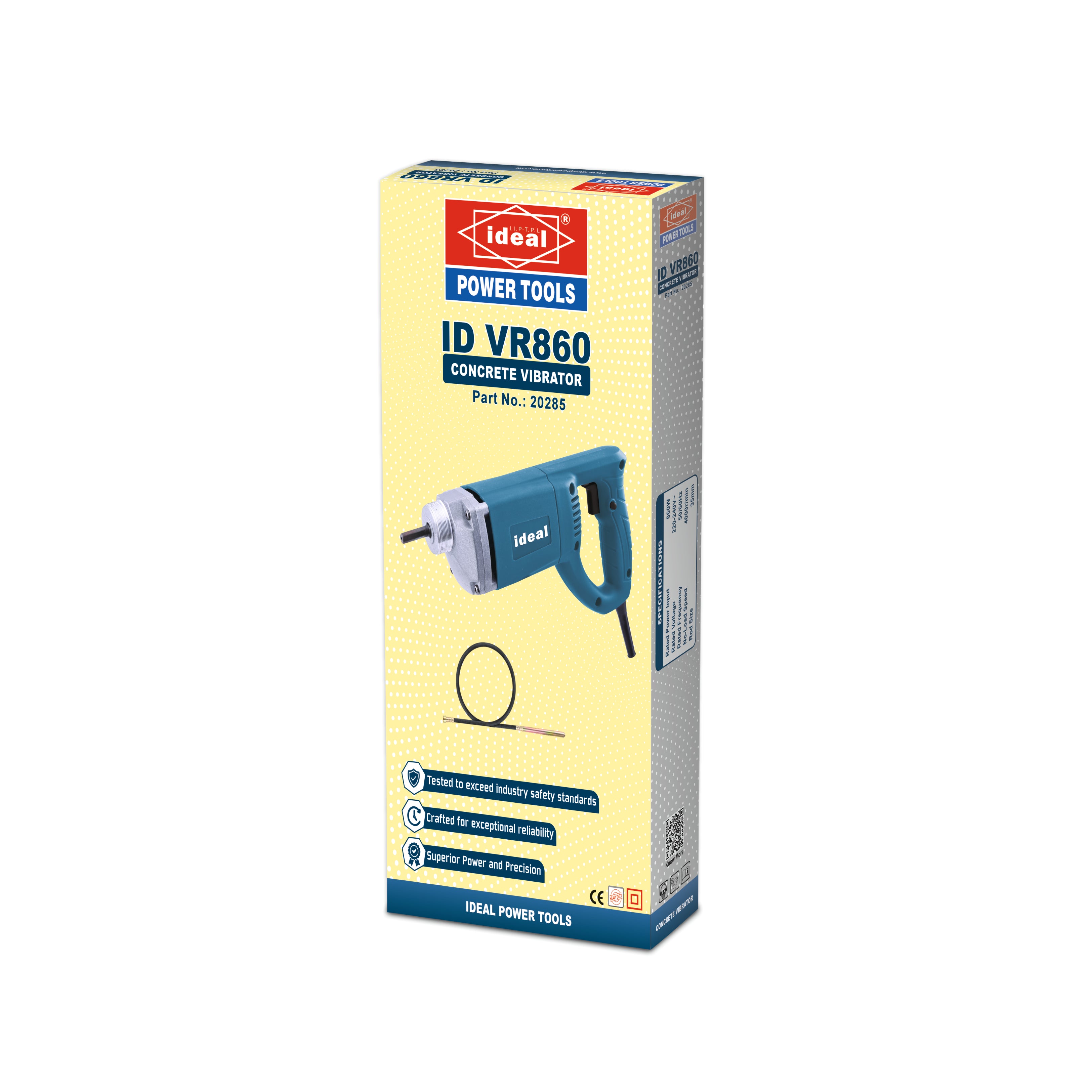
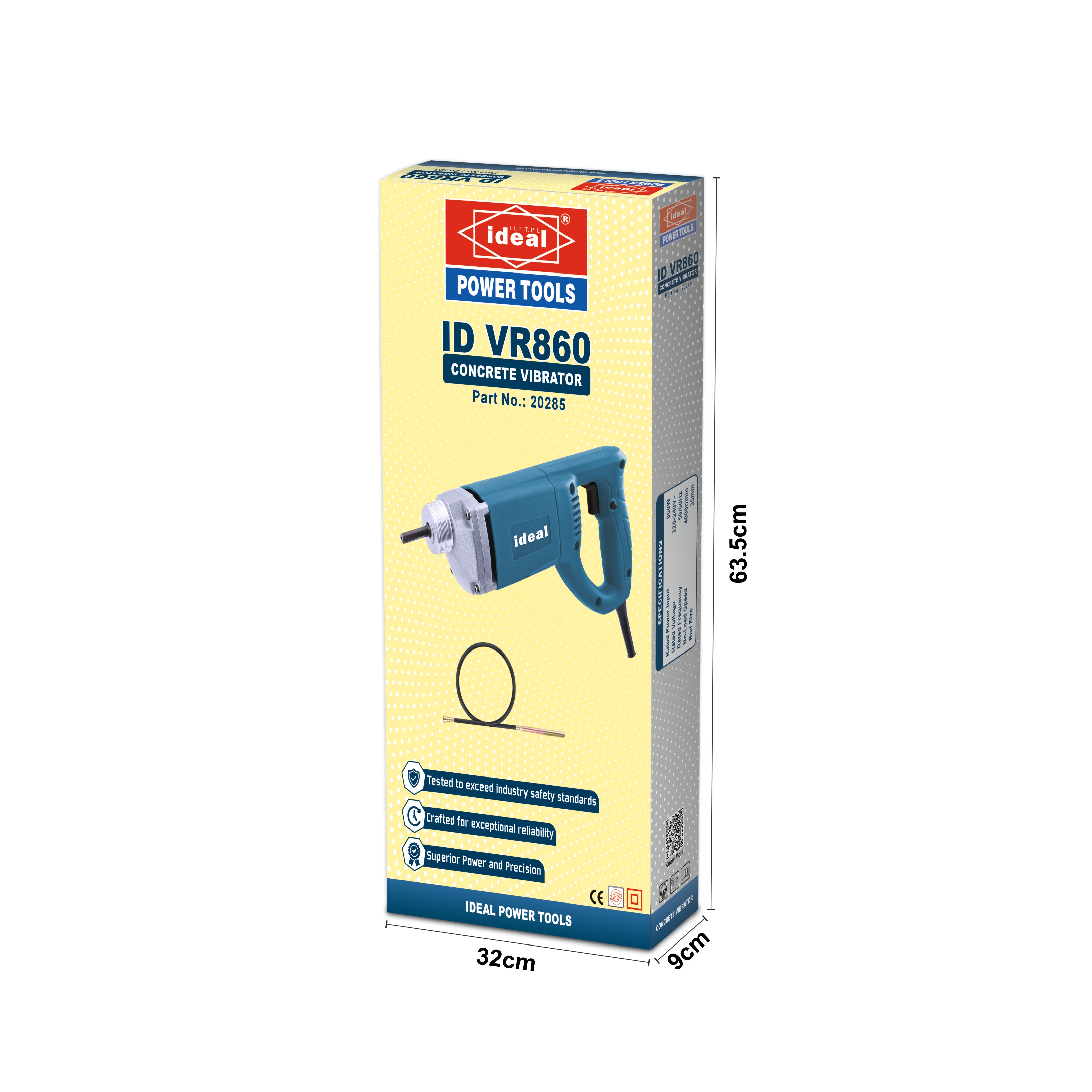
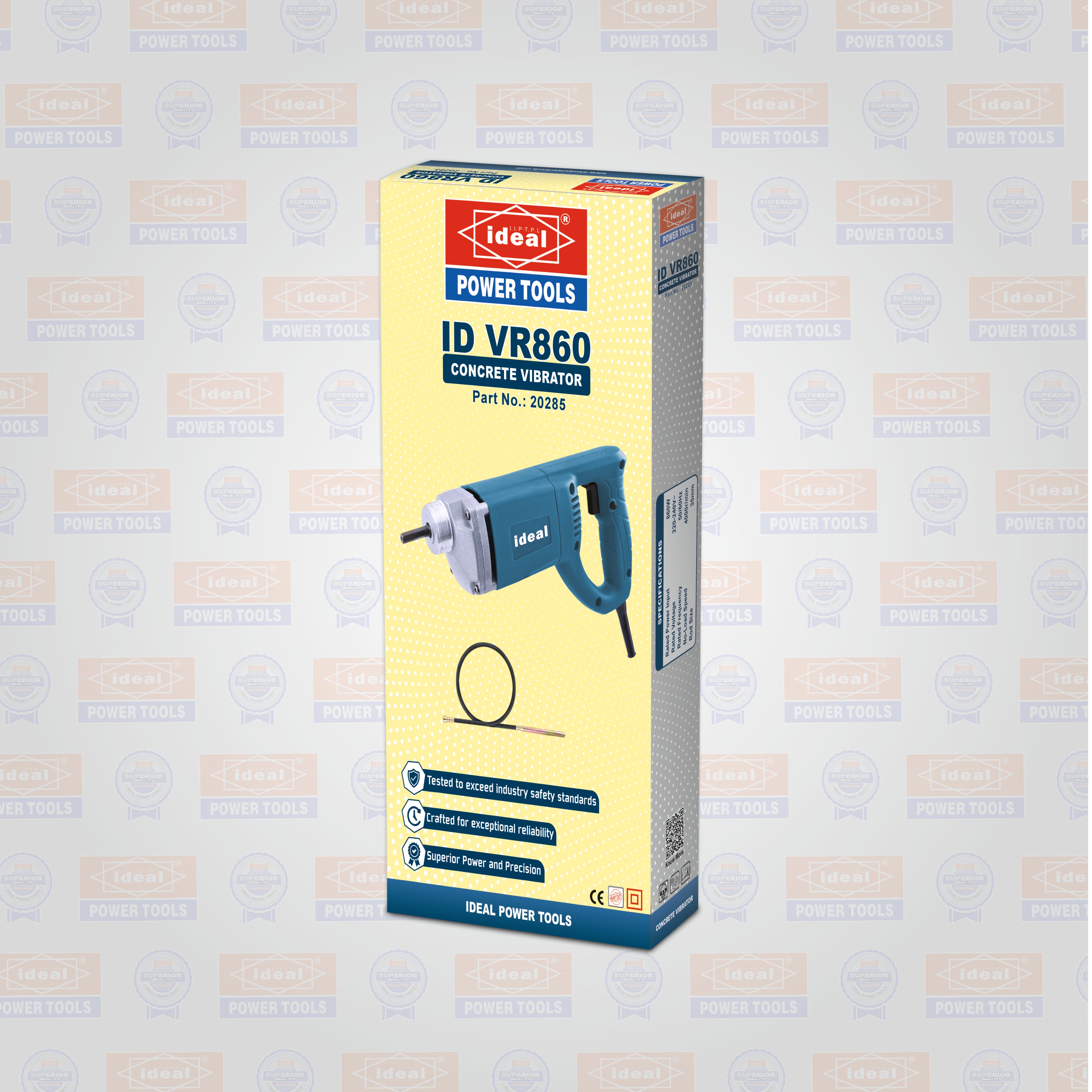
ID VR860 [WITH 1.5M SHAFT] [860W] ELECTRIC CONCRETE VIBRATOR MACHINE [G-240V] - 20285


 Chat with us
Choose options
Professional Concrete Compaction — Built to Perform on Every Pour
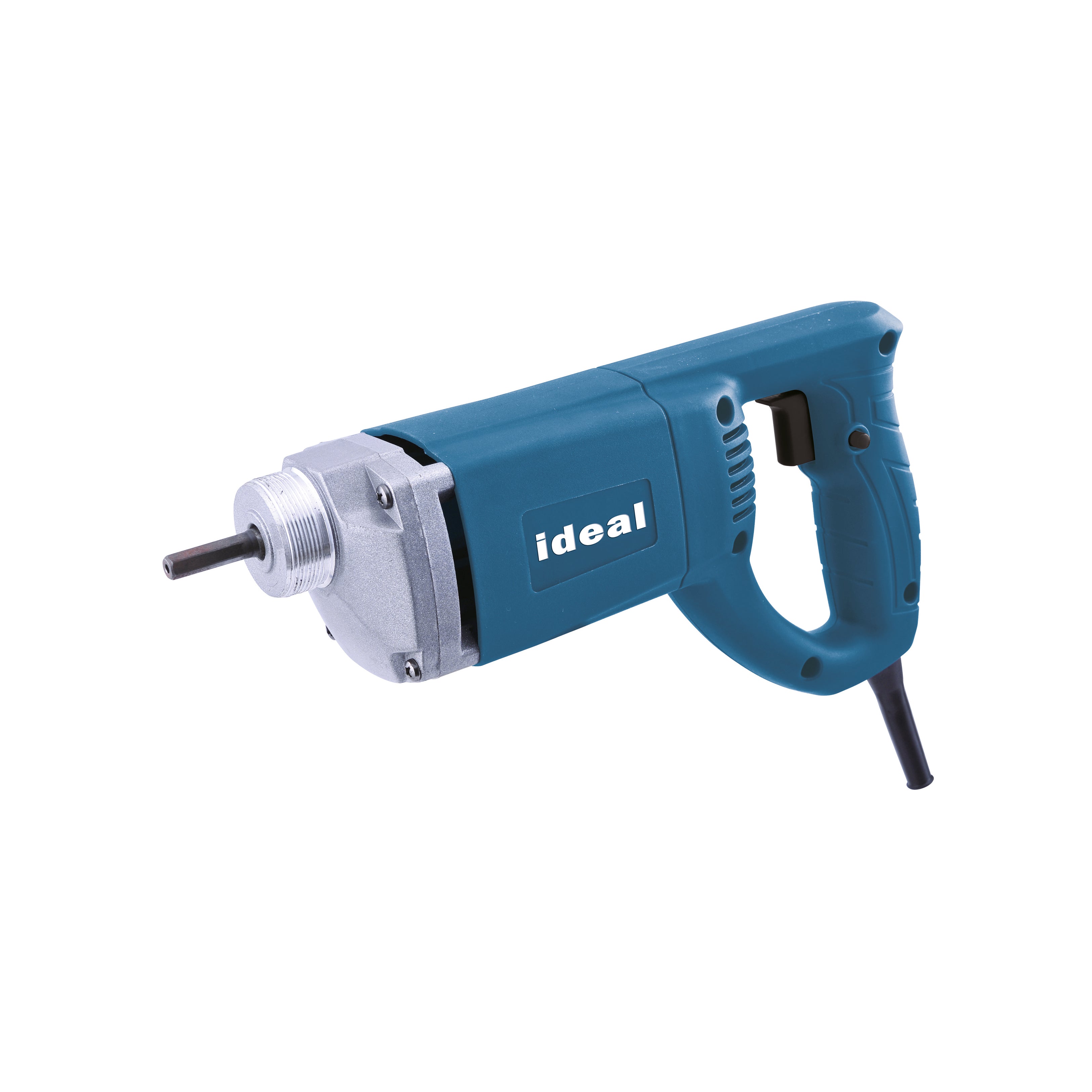
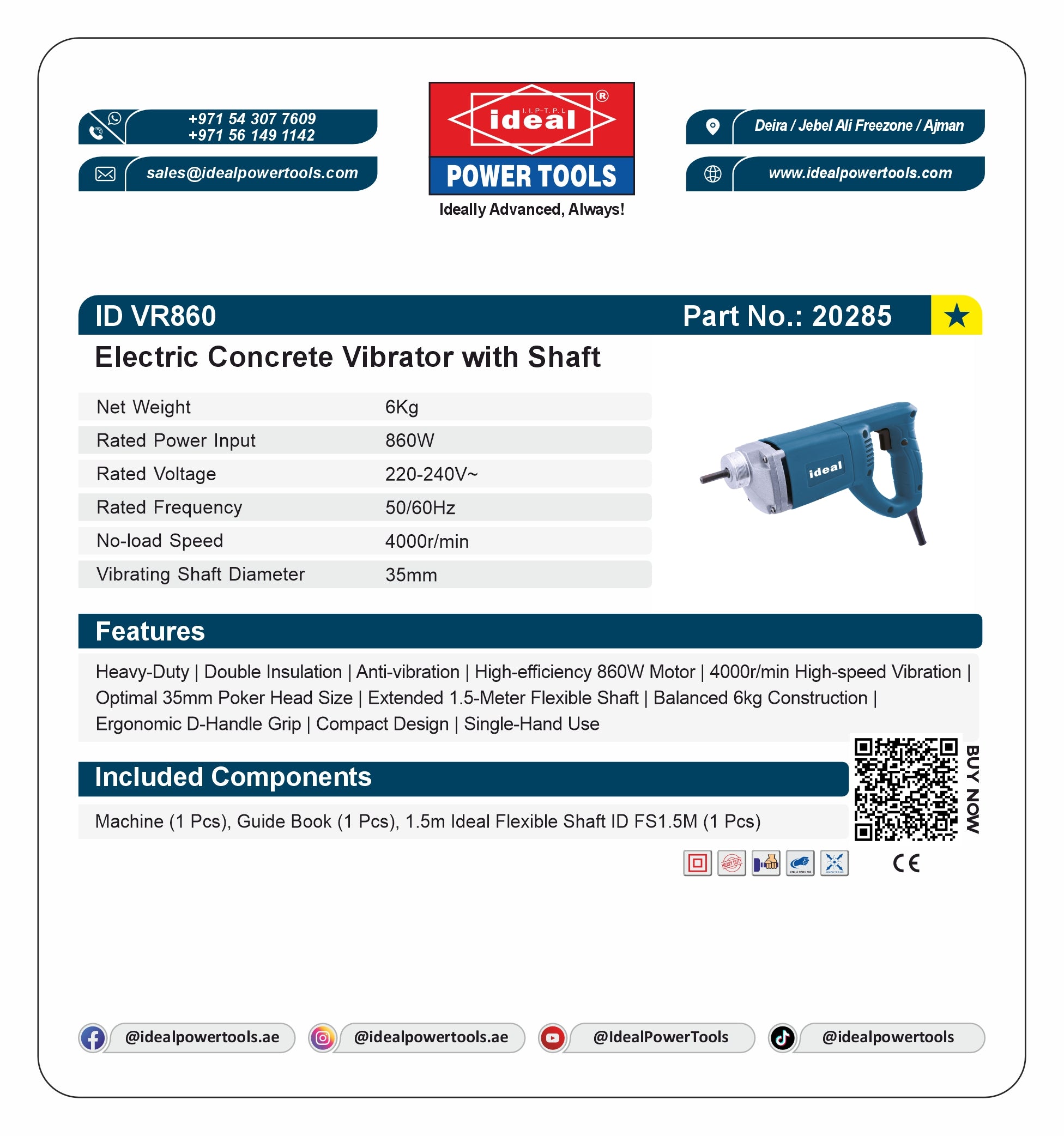
The ID VR860 Electric Concrete Vibrator with a 1.5m flexible shaft is a professional-grade 860W concrete compaction machine engineered for construction, civil engineering, and building projects. Powered at 220–240V with a 4,000 RPM no-load speed and a 35mm vibrating shaft, it efficiently eliminates air pockets and excess water from freshly poured concrete, delivering stronger, denser, and more durable concrete structures. Supplied with a Type G (British 3-Pin) plug, it is ready for use across the UAE, UK, and compatible markets straight out of the box.
| Key Features | Perfect For |
|---|---|
|
|
- 860W Rated Power Input at 220–240V / 50–60Hz: The VR860 draws a full 860 watts of power from a standard single-phase mains supply, making it compatible with site power across the UAE, UK, and GCC markets. This sustained power output ensures the motor maintains consistent vibration even under load in dense concrete mixes, preventing stalling and motor fatigue during extended pours.
- 4,000 RPM No-Load Vibration Speed with 35mm Rod: Operating at 4,000 revolutions per minute, the 35mm vibrating head generates high-frequency oscillations that propagate through the concrete mix, collapsing air voids and drawing trapped water to the surface. The 35mm rod diameter is the industry-standard choice for general-purpose slabs, columns, beams, and walls, providing the ideal balance between penetration radius and insertion spacing.
- 1.5m Flexible Drive Shaft for Extended Reach: The included 1.5-metre flexible shaft connects the motor unit to the vibrating head, allowing operators to reach deep into formwork without repositioning the motor. The flexible design absorbs torsional stress, reducing wear on both the shaft and motor bearings, and enabling use at angles that rigid-shaft machines cannot accommodate.
- Double Insulation for Operator Safety on Wet Job Sites: The VR860 is constructed with a double-insulated housing, meaning the internal electrical components, motor windings, wiring, and connections are fully encapsulated and can never come into contact with the outer casing. This eliminates the risk of electric shock even in wet or damp concrete environments, meeting the safety requirements of the CE certification standard.
- Compact and Lightweight at 6kg Net Weight: Weighing just 6 kilograms, the VR860 motor unit is designed for single-operator use without fatigue during prolonged pours. Its compact form factor makes it easy to transport between job sites, store in a tool bag or vehicle, and manoeuvre in confined formwork areas where larger vibrator units would be impractical.
- CE Certified and Type G Plug Ready: The machine carries CE certification (Machine Test), confirming it meets European safety, health, and environmental protection standards. It ships with a Type G British 3-pin plug, making it immediately usable in the UAE, UK, and other Type G markets without the need for an adaptor, a practical advantage for contractors working across multiple sites.
The VR860 is CE certified (Machine Test), confirming compliance with European machinery safety directives. The package includes the motor unit (1 piece), a 1.5m flexible drive shaft (1 piece), and a guide book (1 piece), everything required to begin compacting concrete immediately upon delivery.
General Purchase & Comparison Queries
Is the ID VR860 suitable for professional construction use, or is it a DIY-grade machine?
The ID VR860 is a professional-grade electric concrete vibrator designed for sustained use on active construction sites. With an 860W rated power input, a 4,000 RPM no-load speed, and a double-insulated motor housing, it is built to handle the demands of commercial concrete pours, foundation work, and civil engineering projects. It is CE certified (Machine Test), confirming it meets the safety and performance standards required for professional machinery.
What plug type does the VR860 use, and is it compatible with UAE and UK power supplies?
The VR860 comes fitted with a Type G British 3-pin plug, which is the standard plug type used in the UAE, UK, and several GCC and Asian markets. It operates on a 220–240V / 50–60Hz single-phase mains supply, meaning it is ready to plug in and use immediately in the UAE without any adaptor or voltage converter. No additional accessories are required for local operation.
What is included in the box when I purchase the ID VR860?
The package includes everything needed to start compacting concrete immediately. You receive the VR860 motor unit (1 piece), a 1.5m flexible drive shaft (1 piece), and a guide book (1 piece). The shaft connects directly to the motor and the vibrating head, so no additional tools or assembly components are required before first use.
Product-Specific and Usage Queries
What is the purpose of the 1.5m flexible shaft, and can it be extended?
The 1.5m flexible drive shaft transmits the rotational force from the motor to the 35mm vibrating head, allowing the operator to insert the vibrating rod deep into formwork while keeping the motor unit above the pour. The flexible design allows the shaft to bend slightly, enabling use at angles and in confined spaces where a rigid shaft would be impractical. The shaft included in this package is 1.5 metres in length — please contact us if you require information on compatible extended shaft options.
How deep and how far apart should I insert the vibrating rod during a pour?
For best results with a 35mm vibrating head, the rod should be inserted vertically into the concrete at intervals of approximately 300–450mm (roughly 8–10 times the rod diameter), and withdrawn slowly at a rate of about 75–100mm per second to allow air bubbles to escape without leaving voids. The rod should penetrate into the previously placed layer by approximately 100–150mm to ensure proper bonding between lifts. Avoid contact with formwork, rebar, or the concrete surface to prevent segregation.
What does double insulation mean, and why does it matter on a construction site?
Double insulation means the VR860's internal electrical components — including the motor windings and all live wiring — are encased in two independent layers of insulating material, ensuring they can never come into contact with the outer casing of the machine. This is critical on construction sites where water, wet concrete, and damp conditions are unavoidable. A double-insulated tool does not require an earth (ground) connection to be safe, reducing the risk of electric shock to the operator even in wet working environments.
Problem/Solution-Oriented Queries
The concrete surface still shows honeycombing after vibrating — what could be wrong?
Honeycombing after vibration is typically caused by insufficient insertion depth, excessive insertion spacing, or withdrawing the rod too quickly. With the VR860's 35mm rod at 4,000 RPM, ensure the rod is inserted to the full depth of the lift and into the previous layer by at least 100mm. Space insertions no more than 400mm apart, and withdraw the rod slowly — no faster than 75–100mm per second. Also check that the concrete mix is not too stiff (low slump), as very dry mixes require longer vibration dwell times to consolidate properly.
The motor feels hot after extended use — is this normal, and how should I manage it?
Some heat generation is normal during sustained operation of an 860W electric motor, particularly during large continuous pours. To manage motor temperature, allow the machine to rest for 5–10 minutes after every 30–40 minutes of continuous use, especially in hot ambient conditions such as UAE summer job sites. Ensure the motor's ventilation slots are not blocked by concrete dust or debris. If the motor becomes excessively hot to the touch or the speed noticeably drops, stop use immediately and allow it to cool fully before resuming.
The flexible shaft is vibrating excessively outside the concrete — is this a problem?
Some external shaft vibration is normal when the vibrating head is not inserted into concrete, as the shaft is designed to transmit high-frequency oscillations. However, excessive whipping or uncontrolled shaft movement when outside the pour can indicate a worn or kinked shaft, or a loose connection between the shaft and the motor or vibrating head. Always inspect the shaft connections before use, avoid sharp bends in the shaft during operation, and never run the machine at full speed with the head suspended freely in air for extended periods, as this accelerates wear on the flexible shaft assembly.
Machine (1 Pcs), Guide Book (1 Pcs), 1.5m Ideal Flexible Shaft ID FS1.5M (1 Pcs)