

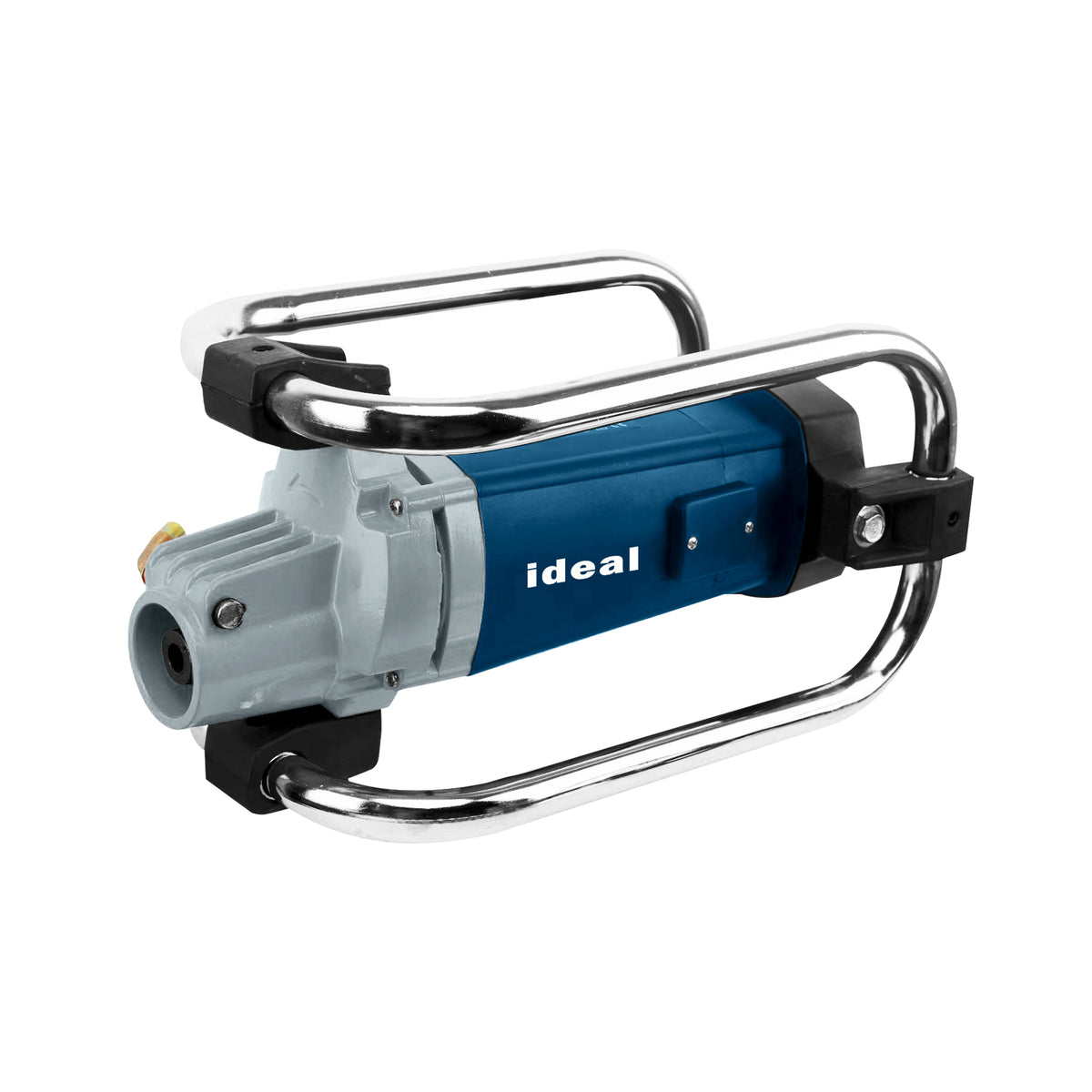
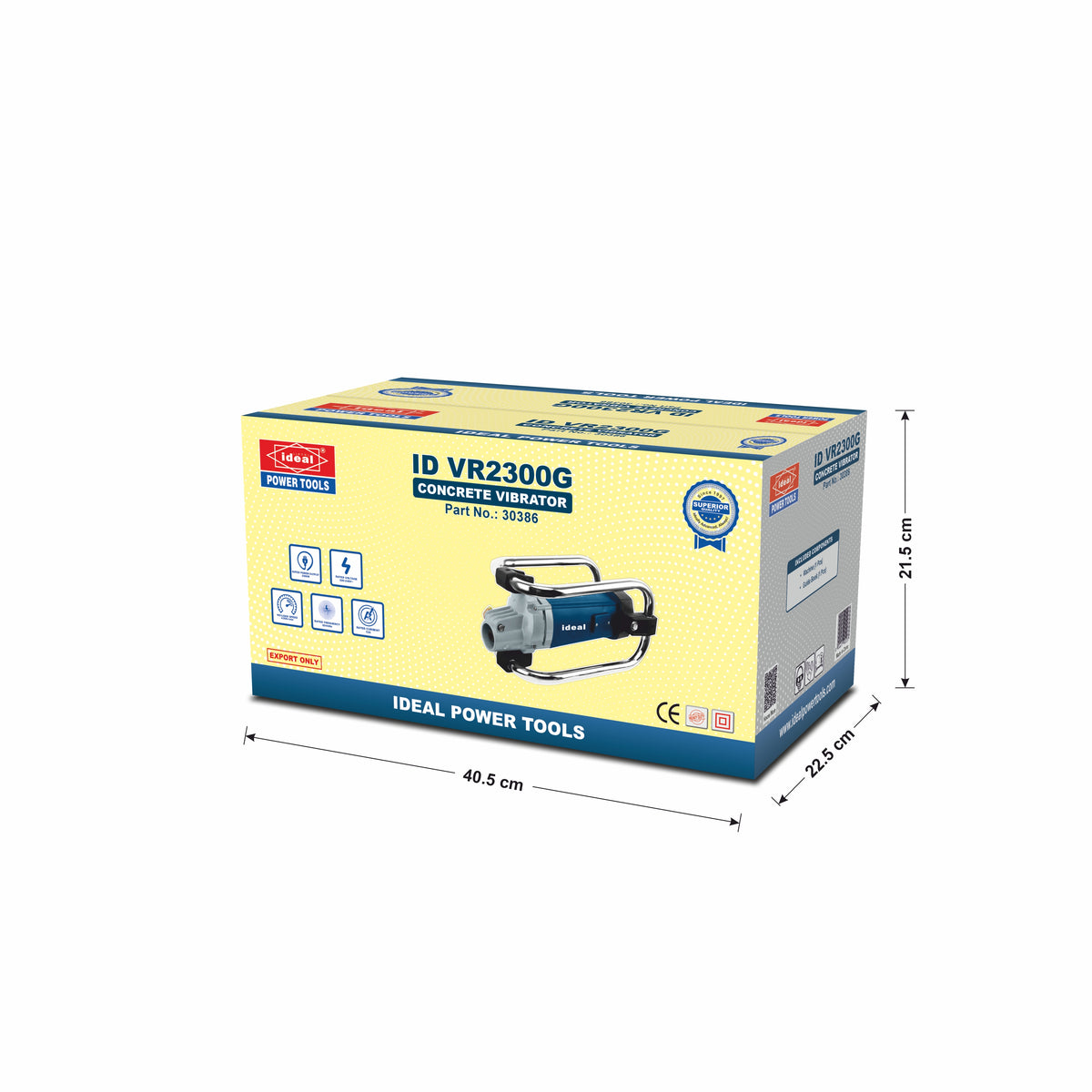
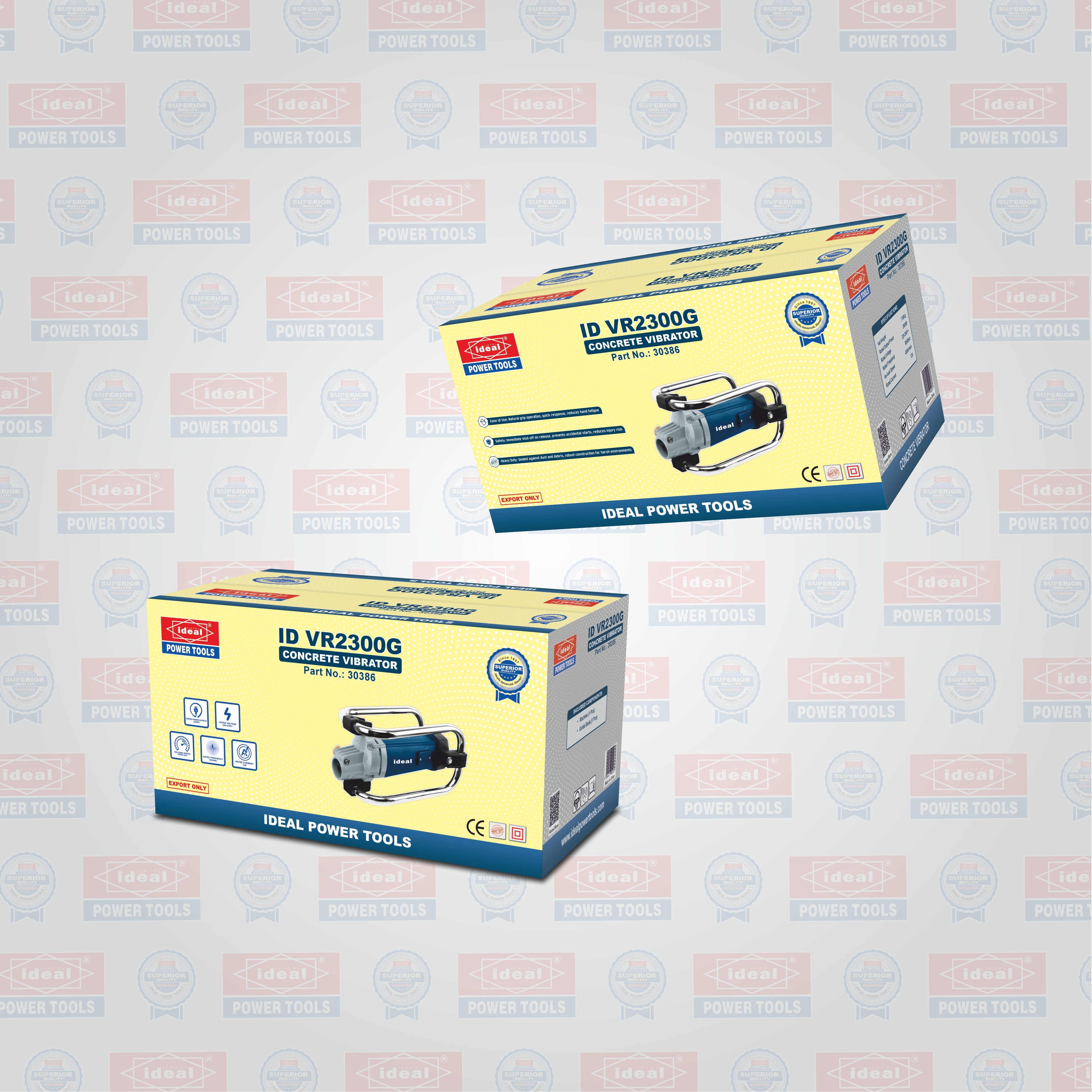
ID VR2300G [50MM] [WITHOUT SHAFT] [2000W] ELECTRIC CONCRETE VIBRATOR MACHINE [G-240V] [DeWalt Type] - 30386


 Chat with us
Choose options
Professional Concrete Compaction — Built for the Most Demanding Pours
The VR2300G Electric Concrete Vibrator Machine is a professional-grade, 2000W heavy-duty concrete compaction tool engineered for construction sites, civil engineering projects, and structural concrete pours. Designed in the DeWalt type form factor and powered by a high-torque motor operating at 4,300 r/min no-load speed, this 50mm shaft-compatible vibrator delivers rapid and thorough consolidation of freshly poured concrete, eliminating air voids, honeycombing, and water pockets to ensure maximum structural integrity. Supplied with a Type G (British 3-Pin) plug and built to CE-certified double insulation standards, it is equally suited for GCC, UK, and European 220–240V job sites.
| Key Features | Perfect For |
|---|---|
|
|
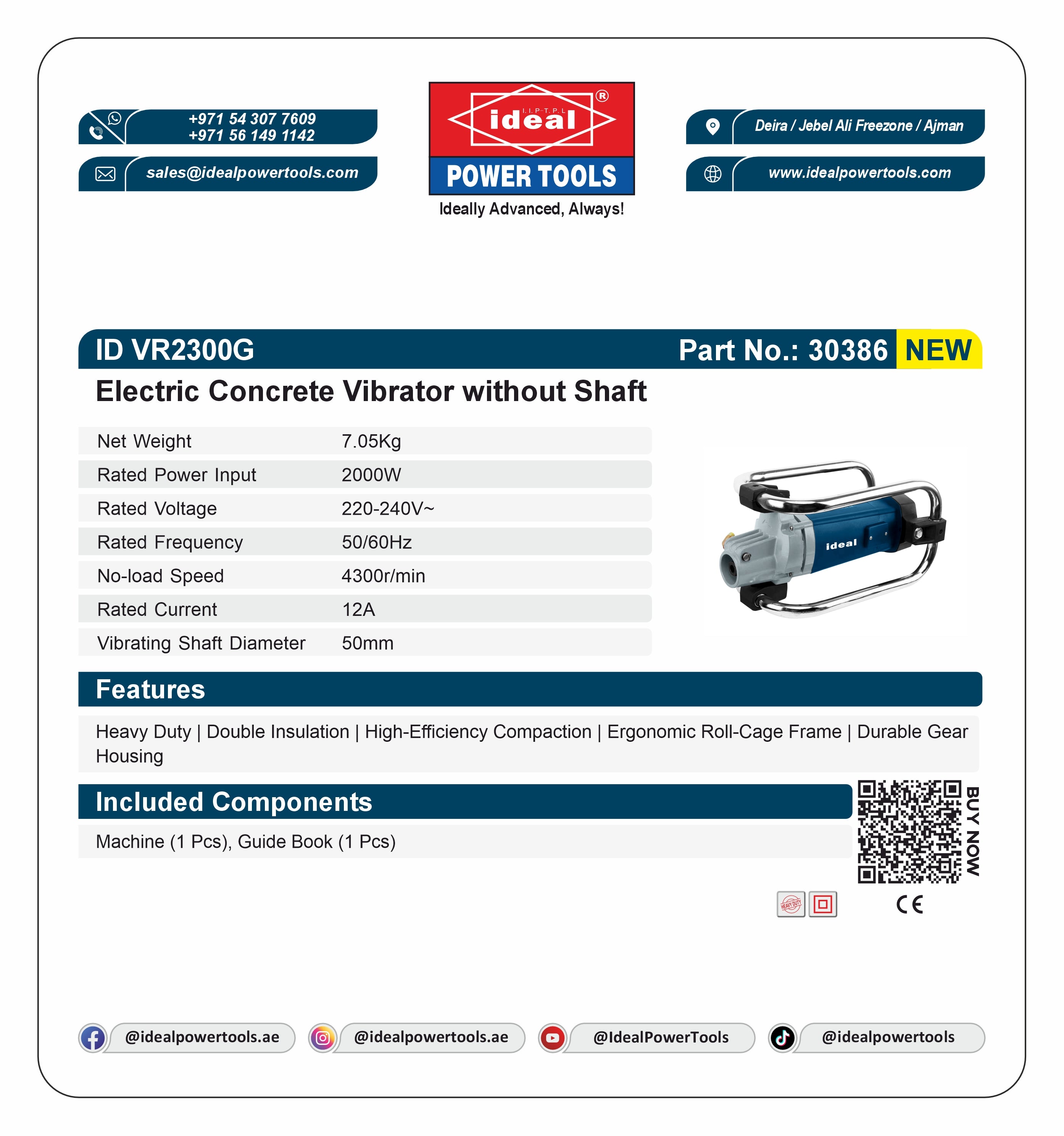
- 2000W rated power input at 220–240V AC, 50/60Hz — this machine draws a rated current of 12A to sustain full vibration amplitude under load, making it suitable for dense aggregate mixes, deep pours, and high-slump concrete without power drop-off or motor strain during extended operation.
- 50mm vibrating shaft diameter with a no-load rotational speed of 4,300 r/min — the vibration radius penetrates deep into freshly poured concrete, rapidly collapsing air pockets around rebar and formwork corners where manual rodding is ineffective, producing a denser, more uniform matrix throughout the pour depth.
- Double-insulated construction certified to CE standards — the machine's electrical architecture physically separates all live components from the external housing, eliminating the risk of electric shock even in wet or damp on-site conditions. This CE-certified design also confirms compliance with EU and UK low-voltage safety directives.
- Wrap-around ergonomic roll-cage handle — the tubular steel frame serves a dual function: it provides the operator with multiple grip positions to control insertion angle and extraction speed of the vibrating needle, while also acting as a protective bumper that prevents motor housing damage during transit, lifting, and ground placement on active job sites.
- Cast-aluminum front gear housing — the die-cast aluminum gear cover dissipates motor-generated heat more efficiently than polymer alternatives, extending bearing and gear service life under continuous-duty cycles. The rigid housing also locks the flexible shaft connection port securely in alignment, reducing shaft wear at the coupling point.
- Net weight of 7.05 kg in a compact, balanced form factor — the low machine weight relative to its 2000W output class enables single-operator use without fatigue during multi-pour shifts, and simplifies positioning in confined formwork environments such as column cages and wall panels.
- Type G (British 3-Pin) plug supplied as standard — ready for direct connection to UK and GCC grid supplies without adapters. Operating at 220–240V~ across a 50/60Hz dual-frequency range ensures compatibility on international job sites where grid frequency tolerance varies.
This machine carries CE certification (Machine Test), confirming conformity with applicable European machinery and electrical safety directives. Each unit ships complete with the machine and a guide book to support safe setup and operation from day one.
General Purchase & Comparison Queries
Is this concrete vibrator suitable for professional and commercial construction use?
Yes. The VR2300G is rated at 2000W with a 12A current draw and operates at 4,300 r/min — specifications that place it firmly in the professional contractor segment. Its cast-aluminum gear housing, double-insulated construction, and CE certification make it a reliable choice for continuous-duty commercial pours, civil engineering projects, and precast manufacturing environments.
How does this model compare to a standard electric concrete vibrator?
The VR2300G is engineered to the DeWalt type form factor, which is recognized for its compact, balanced design and robust motor housing. Compared to generic electric vibrators, it offers a higher no-load speed of 4,300 r/min, a rugged roll-cage frame for multi-angle operation, and a cast-aluminum front gear cover for superior thermal management — features that extend service life under demanding site conditions.
What plug type does this machine use, and is it compatible with my regional power supply?
The VR2300G is supplied with a Type G (British 3-Pin) plug, which is the standard for the UAE, Saudi Arabia, UK, and other GCC and Gulf markets. The machine operates on 220–240V AC at 50 or 60Hz, making it compatible with local grid supplies across the GCC, UK, and most of Europe without requiring a voltage converter.
Product-Specific and Usage Queries
What size vibrating shaft is compatible with this machine?
This unit is designed for use with a 50mm diameter vibrating shaft (needle/poker). The 50mm needle size is well-suited for medium-to-large concrete pours such as slabs, columns, beams, and retaining walls, where a wider vibration radius is needed to consolidate aggregate effectively across the full pour thickness. Note: this listing is for the machine unit only, without a shaft included.
What is the no-load speed and why does it matter for concrete compaction?
The VR2300G operates at a no-load speed of 4,300 r/min. Higher vibration speed directly correlates with faster air bubble migration and more thorough aggregate settlement within the concrete mix. At this frequency, the 50mm needle generates sufficient vibration radius to consolidate concrete in a broad zone around the insertion point, reducing the number of insertions required per pour and improving overall productivity on site.
How heavy is the machine and is it manageable for single-operator use?
The VR2300G has a net weight of 7.05 kg. Despite its 2000W power class, the compact form factor and ergonomic roll-cage handle with wrap-around tubular grip allow a single operator to maneuver the machine efficiently across pour zones, carry it between locations, and position it in tight formwork without requiring a second person for support.
Problem/Solution-Oriented Queries
What happens if there are air pockets left in cured concrete, and how does this vibrator prevent them?
Air pockets (voids) in cured concrete significantly reduce compressive strength, create pathways for moisture ingress, and lead to surface defects such as honeycombing. The VR2300G's 4,300 r/min vibration frequency applied through a 50mm needle rapidly agitates the concrete mix, causing air bubbles to rise and escape before the concrete sets — resulting in a denser, stronger, and more durable finished structure that meets structural load requirements.
Is this machine safe to use in wet or damp on-site conditions?
Yes. The VR2300G is built with double insulation, a safety design in which all live electrical components are physically separated from the outer casing by two independent layers of insulation. This means that even if one layer is compromised, the operator remains protected from electric shock. The machine's CE certification (Machine Test) further confirms it has been independently tested for electrical safety compliance, making it appropriate for the damp, water-present conditions common on active concrete pours.
What should I do if the motor runs hot during extended operation?
The VR2300G's cast-aluminum front gear housing is specifically designed to dissipate heat more efficiently than standard polymer covers, helping maintain safe operating temperatures during sustained use. If you notice elevated heat during a long pour, it is recommended to allow brief cool-down intervals between insertion cycles. Always ensure the ventilation openings on the motor housing are clear of concrete splatter and debris before and after each use, as blocked vents are the most common cause of premature motor overheating in field conditions.
Machine (1 Pcs), Guide Book (1 Pcs)