

Maintaining a garden, agricultural plot, landscaped property, or larger outdoor area involves different types of work. Cutting thick grass, clearing dense vegetation, trimming hedges, removing branches, drilling holes in soil, and clearing leaves all require different tools.
The right agriculture and gardening tools depend primarily on the job. A brush cutter is suited to thick vegetation, a chainsaw to branches and wood, an earth auger to soil drilling, while hedge trimmers and garden blowers handle more specific maintenance tasks.
This guide explains the main gardening power tools used for outdoor maintenance, what each tool is designed for, and what to consider before choosing one.
Which Agriculture and Gardening Power Tools Do You Need?
The most useful tool depends on the material you need to cut, clear, trim, or work with.
| Outdoor maintenance task | Suitable tool |
|---|---|
| Cutting thick grass and weeds | Brush cutter |
| Clearing brush and dense undergrowth | Brush cutter |
| Cutting branches and timber | Chainsaw |
| Drilling holes in soil | Earth auger |
| Trimming hedges and shrubs | Hedge trimmer |
| Clearing leaves, sand and loose debris | Garden blower |
| Cutting branches where mains power is available | Electric chainsaw |
Rather than choosing a tool based only on power or price, consider the type of work, size of the area, material being handled, and how frequently the tool will be used.
Brush Cutters for Thick Grass, Weeds and Dense Vegetation
A brush cutter is designed for vegetation that is too thick, tall, or dense for a conventional lawn trimmer. It can be useful for maintaining field edges, overgrown plots, irrigation banks, garden boundaries, and areas with heavy weed growth.
What is a brush cutter used for?
A brush cutter is primarily used to cut thick grass, weeds, brush, and dense undergrowth. It is particularly useful where vegetation is uneven or overgrown and requires more cutting capability than a standard lawn trimmer.
When choosing a brush cutter, consider:
- Engine displacement and power: Important for heavier vegetation and longer working periods.
- Operating speed: Higher cutting speed can help maintain productivity, depending on the cutting system.
- Handle design: Adjustable handlebars can improve control and working posture.
- Harness arrangement: Important when carrying the tool for extended periods.
- Cutting system and guard: Match the cutting attachment to the vegetation and ensure appropriate protection is in place.
For heavier outdoor maintenance, the ID BCB85 gasoline brush cutter from Ideal Power Tools uses a 52cc two-stroke engine with a rated power of 1.2 kW. Its adjustable handlebars, ergonomic harness arrangement, protective blade guard, and safety throttle lock are designed for controlled operation in demanding vegetation-clearing applications.
Tackling tough overgrowth efficiently with the ID BCB85 backpack brush cutter.
Shop Ideal ID BCB85 NowBrush Cutter vs Lawn Trimmer
A lawn trimmer is generally suited to lighter grass and finishing work around lawns, paths, and garden edges. A brush cutter is intended for thicker grass, weeds, brush, and tougher vegetation.
If the work regularly involves overgrown areas or dense vegetation, a brush cutter is generally the more appropriate tool category.
Chainsaws for Branches, Trees and Timber
Chainsaws are used for cutting wood, branches, logs, and other timber-related materials. They are common in landscaping, land management, forestry, tree maintenance, and outdoor property work.
What is a chainsaw used for?
A chainsaw can be used for tasks such as:
- Removing branches
- Pruning and limbing
- Cutting firewood
- Cutting logs and timber
- Clearing fallen branches
- Tree and land maintenance
The right chainsaw depends on the size and type of material being cut.
Important factors include:
- Engine or motor power: Determines the tool's ability to handle different cutting loads.
- Guide bar length: Affects the size of material that can be handled in a single cutting setup.
- Weight: Important when the tool needs to be used for extended periods or at different working heights.
- Power source: Gasoline models provide portability, while electric models can be practical where suitable electrical power is available.
- Safety features: Kickback protection, chain brakes, and other safety systems should be considered before purchase.
Ideal Power Tools' gasoline chainsaw range includes models such as the ID 5822 and ID PCS20 for different outdoor cutting requirements.
The ID 5822 uses a 58cc gasoline engine, 2.6 kW rated power, and a 560mm (22-inch) guide bar. The ID PCS20 uses a 52cc gasoline engine with 2.6 kW rated power and a 500mm (20-inch) guide bar.

Heavy-duty performance with the 22" ID 5822 and 20" ID PCS20 chainsaws in action.
Electric Chainsaw vs Gasoline Chainsaw
The choice between an electric and gasoline chainsaw depends largely on the working environment.
Gasoline chainsaws are useful where mobility and freedom from mains power are important, particularly across larger outdoor areas.
Electric chainsaws can be convenient for suitable garden and property maintenance tasks where access to electrical power is available.
The important consideration is not simply which power source is more powerful, but whether it matches the location, cutting requirements, and expected working conditions.
Earth Augers for Planting, Fencing and Landscaping
An earth auger is designed to drill holes directly into soil. It can significantly reduce the manual effort involved in preparing multiple holes for planting, posts, fencing, and other outdoor projects.
What is an earth auger used for?
Earth augers are commonly used for:
- Planting trees and shrubs
- Installing fence posts
- Preparing holes for landscaping
- Agricultural planting work
- Soil drilling
- Other repetitive ground-hole applications
When choosing an earth auger, consider:
- Engine displacement and power
- Auger diameter
- Required hole depth
- Ground conditions
- Machine weight and handling
- Type of work and number of holes required
The ID AD600 gasoline earth auger from Ideal Power Tools uses a 52cc two-stroke engine with a rated power input of 1700W and a net weight of 8.5kg. It is designed for drilling in soil, clay, and compacted ground.

ID AD600 52cc Gasoline Earth Auger Drilling into Compacted Ground.
Shop Ideal ID AD600 NowFor different hole-drilling requirements, the agriculture and gardening range also includes the ID AD6817 earth auger.
Hedge Trimmers for Hedges and Shrubs
Hedge trimmers are designed for maintaining the shape and size of hedges and shrubs. Compared with manually operated shears, a powered hedge trimmer can make repetitive trimming work more efficient across larger areas.
What is a hedge trimmer used for?
A hedge trimmer is primarily used to:
- Shape garden hedges
- Trim overgrown shrubs
- Maintain property boundaries
- Control hedge growth
- Perform regular landscape maintenance
When choosing one, look at:
- Cutting length: Determines the area covered with each pass.
- Maximum cutting capacity: Indicates the approximate branch diameter the tool is designed to handle.
- Strokes per minute (SPM): Provides an indication of blade movement speed.
- Weight: Important for overhead and extended trimming.
- Battery capacity: Particularly relevant for cordless models and longer jobs.
The IDU HT-16 cordless hedge trimmer from Ideal Power Tools uses a 20V battery system, with a 410mm cutting length, 1300 SPM, and a listed maximum cutting capacity of 18mm. The kit includes a 2.0Ah battery and charger.

Effortless trimming in action with the IDU HT-16 cordless hedge trimmer.
Shop Ideal IDU HT-16 NowGarden Blowers for Leaves, Sand and Loose Debris
Once grass has been cut, hedges trimmed, or outdoor areas maintained, loose leaves, grass clippings, sand, and other debris still need to be cleared.
A garden blower provides a practical way to move this material without manually sweeping large areas.
What is a garden blower used for?
Garden blowers can be used to clear:
- Leaves
- Grass clippings
- Dust and loose debris
- Sand from outdoor areas
- Driveways, paths, patios, and landscaped surfaces
When selecting a blower, pay attention to air volume, air speed, speed control, battery capacity, and overall weight.
The IDU GB-480 cordless garden blower operates on a 20V battery platform and offers variable speed from 5,000 to 15,500 RPM, with a turbo speed of 20,500 RPM and air volume of up to 8 m³/min.

Effortless yard cleanup and unmatched blowing power with the IDU GB-480.
Shop Ideal IDU GB-480 NowFor outdoor conditions where sand is also a concern, see our guide to choosing a garden blower for Dubai's sand and outdoor conditions.
How to Choose the Right Agriculture and Gardening Tools
Choosing agricultural tools and gardening power tools becomes easier when the selection starts with the job rather than the product.
1. Match the tool to the material
First identify what you are actually working with:
- Thick grass and weeds → brush cutter
- Woody branches → chainsaw
- Soil → earth auger
- Hedges and shrubs → hedge trimmer
- Leaves and loose debris → garden blower
Using the wrong tool can make a task slower, less controlled, or unnecessarily demanding.
2. Consider the size of the area
A small residential garden has different requirements from a farm, landscaped property, or large plot of land.
For smaller areas, cordless garden power tools can offer convenient handling and easier movement. Larger areas or heavier vegetation may require gasoline-powered equipment with greater operating range.
3. Choose the appropriate power source
The main options include:
- Gasoline: Useful where portability and extended outdoor operation are important.
- Corded electric: Suitable when mains power is readily available.
- Cordless: Convenient for mobility and smaller-to-medium maintenance jobs.
The right choice depends on access to power, working duration, tool weight, and the environment.
4. Consider comfort and maintenance
A tool that is technically capable of completing a job still needs to be manageable during actual use.
Consider:
- Weight
- Handle design
- Harness or support system
- Vibration
- Battery runtime
- Ease of cleaning
- Maintenance requirements
Regular cleaning and inspection also help keep outdoor power equipment ready for use. Our Power Tool Maintenance Guide: Daily, Weekly & Monthly Checklist covers practical maintenance routines that can be applied across different power-tool categories.
Agriculture & Gardening Power Tool Safety
Outdoor power tools can involve rapidly moving blades, chains, cutting attachments, rotating components, and powerful motors. Safe operation should therefore be part of tool selection and routine maintenance.
Before using an agriculture or gardening power tool:
- Inspect the tool and cutting components before operation.
- Wear appropriate personal protective equipment.
- Keep bystanders away from the working area.
- Use the tool only for its intended application.
- Check guards and safety features before starting.
- Disconnect the power source before cleaning, adjustment, or maintenance.
- Follow the manufacturer's operating instructions.
For a more detailed checklist covering pre-use inspection, PPE, correct-tool selection, and safe handling, see the Power Tool Safety Checklist.
Which Tool Do You Need for Each Job?
| Your task | Tool category | Key selection factor |
|---|---|---|
| Cut tall or thick grass | Brush cutter | Engine power and cutting system |
| Clear dense weeds and brush | Brush cutter | Power, handle and harness |
| Cut branches | Chainsaw | Guide bar length and power |
| Cut timber or logs | Chainsaw | Engine/motor power and bar length |
| Drill holes in soil | Earth auger | Auger size and ground conditions |
| Maintain hedges | Hedge trimmer | Cutting length and cutting capacity |
| Clear leaves and loose debris | Garden blower | Air volume and speed |
| Maintain a larger agricultural area | Combination of tools | Job type, area size and power source |
The key is that there is no single agriculture or gardening power tool that handles every outdoor maintenance task. A practical setup usually combines several tools based on the work performed most frequently.
Building a Practical Garden and Agricultural Tool Setup
The equipment needed will vary according to the property and type of work.
For home gardens
A basic setup may include:
- Cordless hedge trimmer
- Garden blower
- Suitable chainsaw for branch maintenance
- Brush cutter where thicker vegetation is present
For landscaping work
A more extensive setup may include:
- Brush cutter
- Hedge trimmer
- Chainsaw
- Garden blower
- Earth auger for planting and landscaping projects
For agricultural land and larger outdoor areas
Larger properties may require a combination of:
- Gasoline brush cutter
- Gasoline chainsaw
- Earth auger
- Garden blower
- Additional equipment selected according to planting, clearing, fencing, or land-maintenance requirements
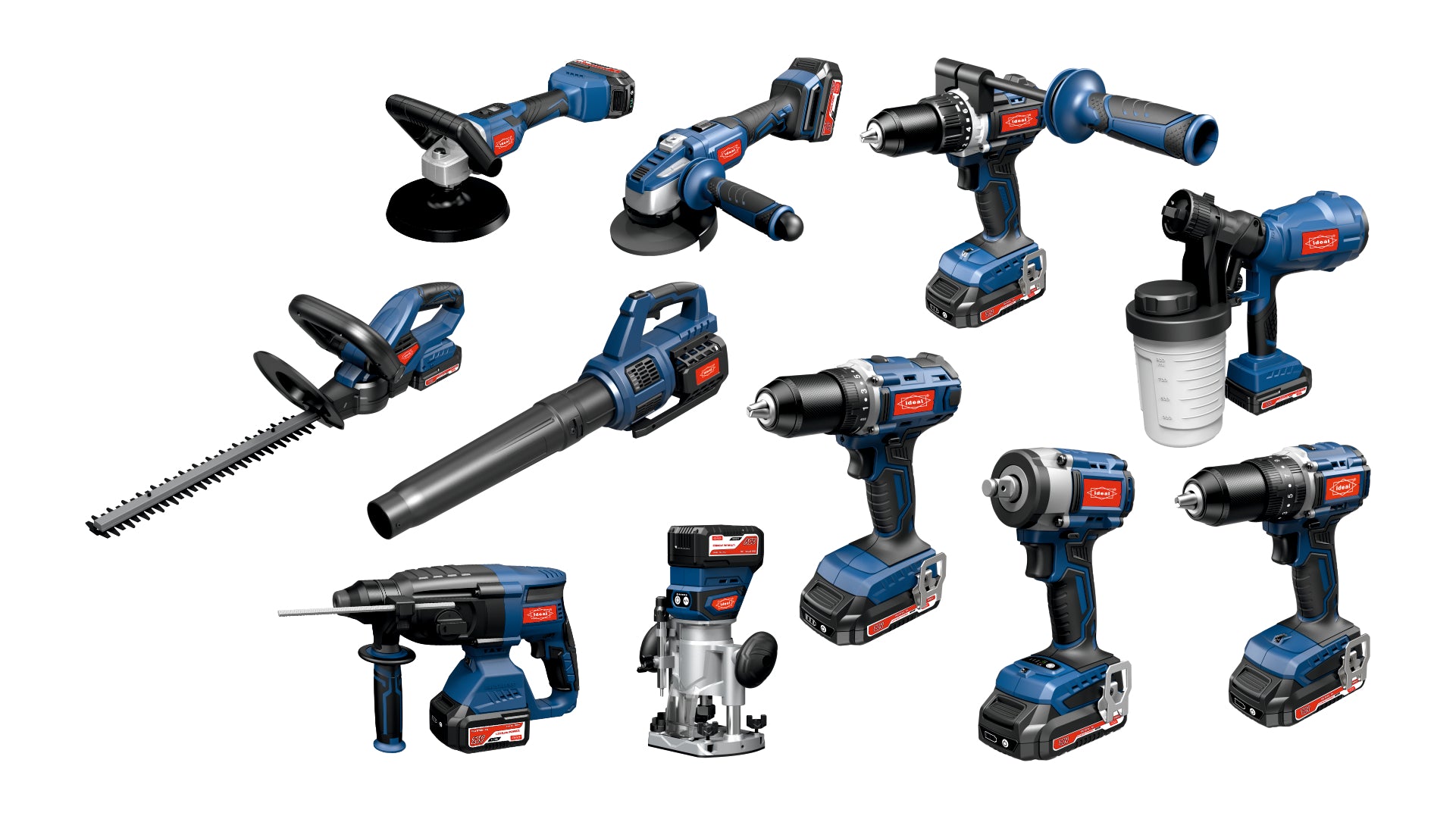
The Ideal Power Tools agriculture and gardening range brings these different tool categories together, allowing equipment to be selected according to the specific maintenance task rather than relying on one general-purpose machine.
Frequently Asked Questions
What tools are needed for garden maintenance?
Common garden maintenance tools include a brush cutter, hedge trimmer, chainsaw, garden blower, and other hand or power tools depending on the property. The required combination depends on whether the main work involves grass cutting, hedge trimming, branch removal, or debris clearing.
What power tools are used in gardening?
Common gardening power tools include brush cutters, hedge trimmers, chainsaws, garden blowers, and earth augers. Each is designed for a different type of outdoor maintenance task.
What tools are used for agricultural land maintenance?
Agricultural land maintenance may require brush cutters for vegetation, chainsaws for branches and timber, earth augers for soil drilling, and blowers for clearing loose debris. The appropriate equipment depends on the size and condition of the land.
Which tool is best for cutting thick grass?
A brush cutter is designed for thick grass, weeds, and dense vegetation. When selecting one, consider engine power, cutting system, handle design, harness arrangement, and the amount of vegetation that needs to be cleared.
What is an earth auger used for?
An earth auger is used to drill holes in soil for applications such as planting, landscaping, and installing fence posts. It is particularly useful when multiple holes need to be prepared.
How do I choose between a brush cutter and a lawn trimmer?
Choose based on the vegetation and working conditions. Lawn trimmers are generally suited to lighter grass and edge finishing, while brush cutters are designed for thicker grass, weeds, brush, and dense vegetation.
Choose the Tool for the Work
Effective outdoor maintenance starts with identifying the work that needs to be done. Instead of choosing a tool based only on power or specifications, consider the material, area, frequency of use, working environment, and level of control required.
From brush cutters and chainsaws to earth augers, hedge trimmers, and garden blowers, Ideal Power Tools offers different equipment options for garden, landscaping, agricultural, and land-maintenance applications.
Explore the Agriculture & Gardening Tools collection to find the appropriate tool category for your next outdoor maintenance job.